Drone mapping services can produce far more than aerial photos—orthomosaics, 3D models, point clouds, and elevation data that feed directly into GIS, CAD, and BIM workflows. But ask three providers to
Let me tell you something that happens way too often.
A company spends $15,000 on a drone, excited about the flight time and range. They get it in the air and mount their LiDAR sensor—and the drone barely lifts off. Or it flies, but for eight minutes instead of the 35 it was promised. Or worse, it flips over on takeoff because the payload shifted the center of gravity.
The problem? Nobody told them to start with the payload.
It's an honest mistake. Manufacturers advertise flight times of "up to 45 minutes"—but that's without anything attached. They brag about range — but range is calculated with a featherlight camera, not a 3kg LiDAR system. Buyers read the specs, assume everything works together, and end up with a drone that can't do the job.
This guide exists to fix that.
Here's what you'll actually learn: what is a drone payload, how much weight different drone classes can carry (from 1kg to 200kg+), how payload affects flight time and stability, and how to calculate your own requirements before you buy.
What Is a Drone Payload?
Let's start with the simple definition.
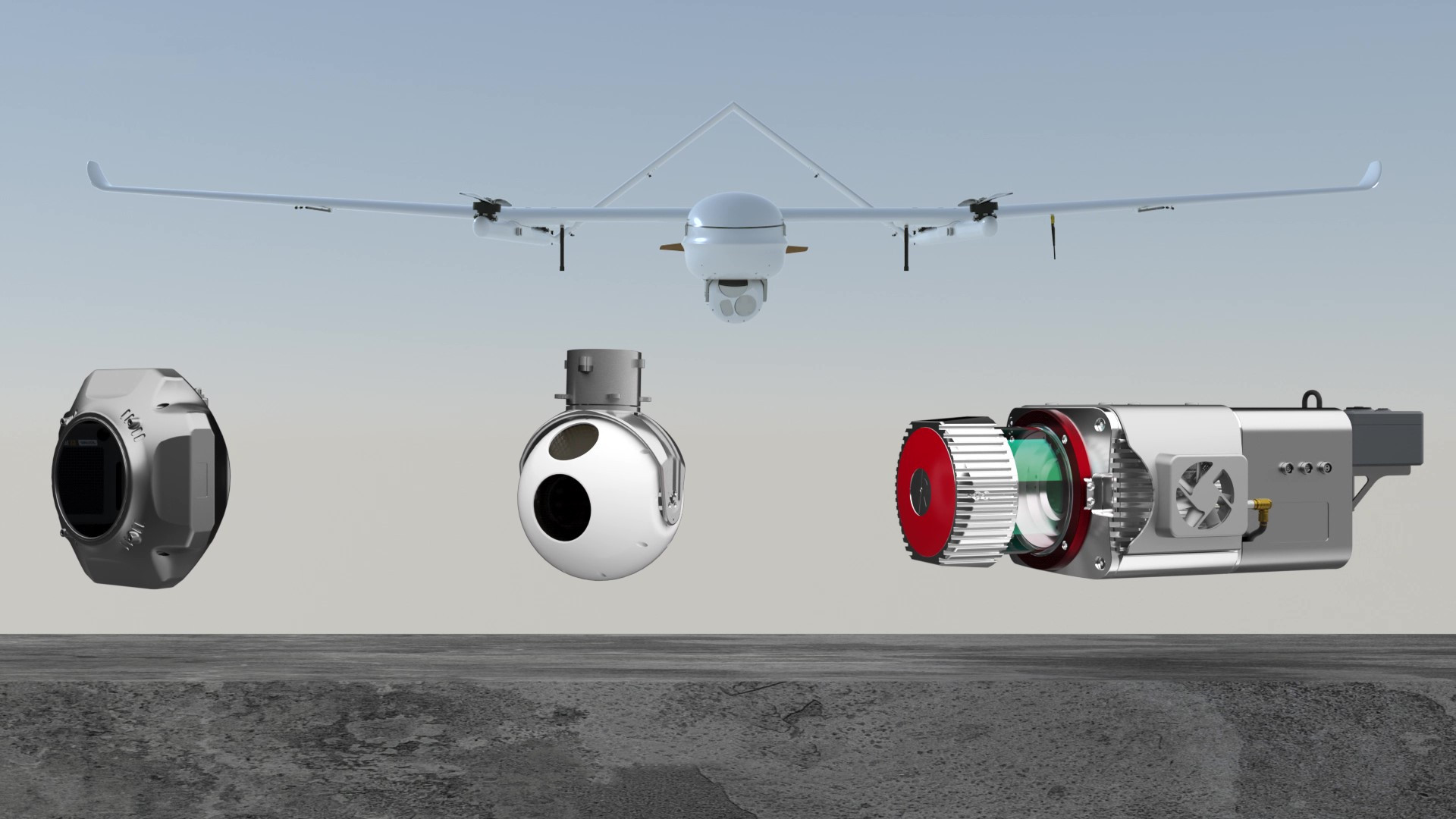
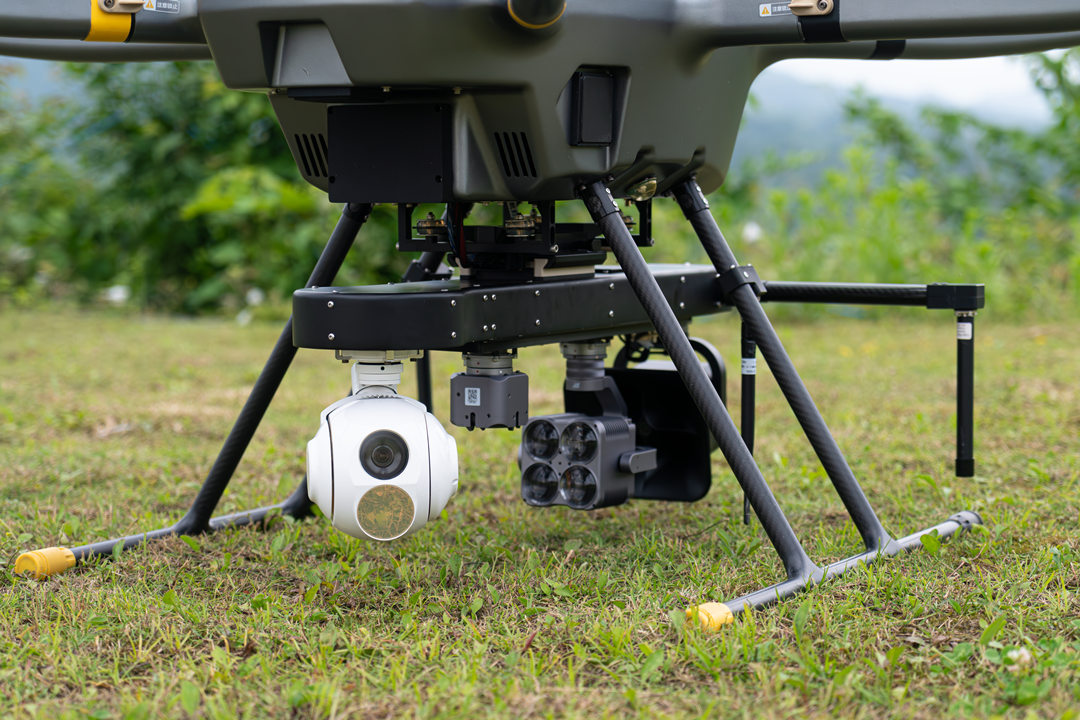
A drone payload is anything a drone carries that isn't required for flight. Cameras. Sensors. Cargo. Sprayers. Delivery packages. Speakers. Searchlights. If it's not part of the airframe, motors, battery, or flight controller, it's payload.
Think of it this way: the drone is the truck. The payload is what's in the back.
Some payloads are obvious. A thermal camera for search and rescue. A LiDAR sensor for surveying. A box of medical supplies for delivery. Others are less obvious but equally important: a loudspeaker for crowd control, a spotlight for night operations, or a gas detector for pipeline inspection.
What matters is this: the payload is why you bought the drone in the first place. The drone just gets it there.
Payload vs. MTOW
Here's where a lot of people get tripped up.
MTOW stands for Maximum Takeoff Weight. It's the total weight of everything — the drone, the battery, the payload, and anything else attached — at the moment of takeoff.
Payload capacity is just one part of that. Specifically, it's MTOW minus the weight of the drone itself.
Here's the simple math:
Payload Capacity = MTOW - Drone Weight
Let's make it real.
A drone has an MTOW of 20kg. The drone itself (airframe, motors, ESCs, flight controller, and battery) weighs 12 kg. That leaves 8kg for payload.
Seems straightforward, right? But here's where manufacturers get clever.
Some quote payload capacity without batteries. Others quote it with a specific battery that's lighter than the one you'll actually use. And almost all quote flight times with no payload at all.
That 45‑minute flight time you see on the spec sheet? That's with a bare drone and a fresh battery. Add a 3kg LiDAR system, and you might be looking at 15‑20 minutes.
The takeaway: Always, always check what's included in the payload capacity number. Ask: "Is that with batteries? With a standard payload? With a specific battery configuration?" If the salesperson can't answer clearly, that's a warning sign.
Why Payload Matters More Than Most Buyers Realize
Payload isn't just about weight. It affects everything.
- Flight time — every gram of payload reduces endurance. A drone that flies 40 minutes empty might fly 20 minutes with a 5kg payload.
- Stability — uneven payloads shift the center of gravity. If the weight isn't centered, the drone has to work harder to stay level, which burns more battery and can make flight dangerous.
- Safety — exceeding MTOW is illegal in most countries and unsafe in all of them. Overloaded drones are harder to control, slower to respond, and more likely to crash.
- Regulatory compliance — in many jurisdictions, MTOW determines what rules apply. Go over 55 lbs (25kg) in the US, and you're in a whole different regulatory category.
At JOUAV, we see this all the time. A customer comes to us after buying a drone that looked great on paper—but couldn't carry the sensor they actually needed. The project got delayed. The budget got blown. The drone sat in a corner collecting dust.
That's why we tell every customer the same thing: start with your payload, then choose the drone. Not the other way around.
Let's walk through each tier.
Under 1kg — Consumer and Light Commercial
This is where most people start. Small cameras, lightweight sensors, and basic inspection tools.
DJI Mavic 3 Enterprise carries about 500g–1kg of payload. It's fine for thermal imaging and basic mapping. Flight time is around 45 minutes empty — expect 30–35 minutes with a payload.
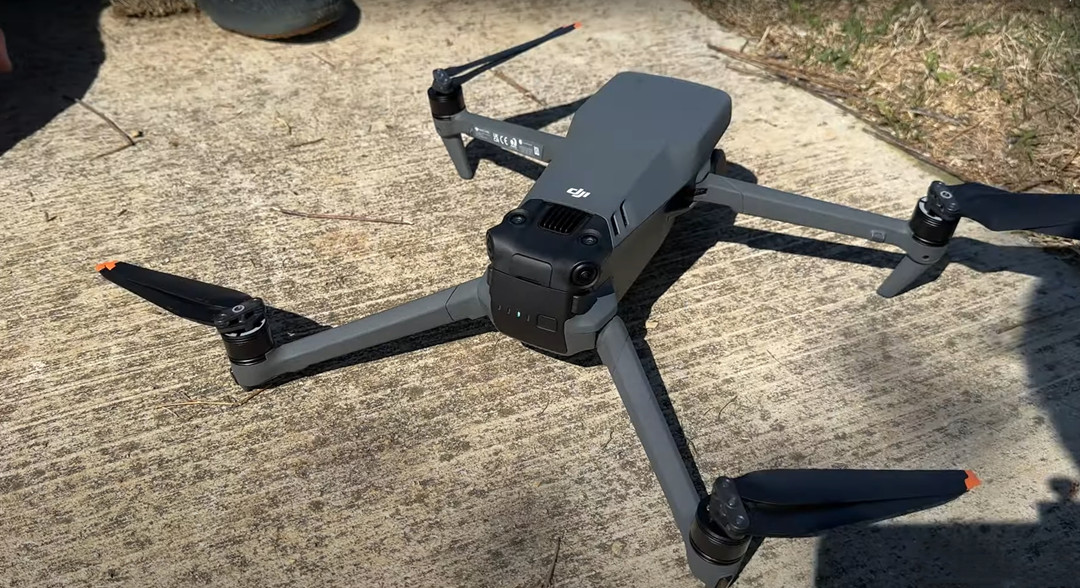
What you can carry: Small RGB cameras, basic thermal sensors, lightweight multi-spectral units.
The catch: You're limited to lightweight payloads. No LiDAR. No heavy cinema cameras. No cargo.
1–5kg — The Enterprise Sweet Spot
This is where most enterprise drones live. They're designed for inspection, mapping, and public safety — not heavy cargo.
The DJI Matrice 350 RTK is the flagship here. It supports a maximum payload of 2.7kg and can carry up to three payloads simultaneously. Flight time is 55 minutes empty — expect around 25–30 minutes with a full payload. It's IP55-rated and operates from -20°C to 50°C.
The JOUAV CW-15 is a VTOL fixed-wing drone with a 3kg payload capacity. With 180 minutes of flight time, it covers around 1,060 hectares in a single mapping mission.
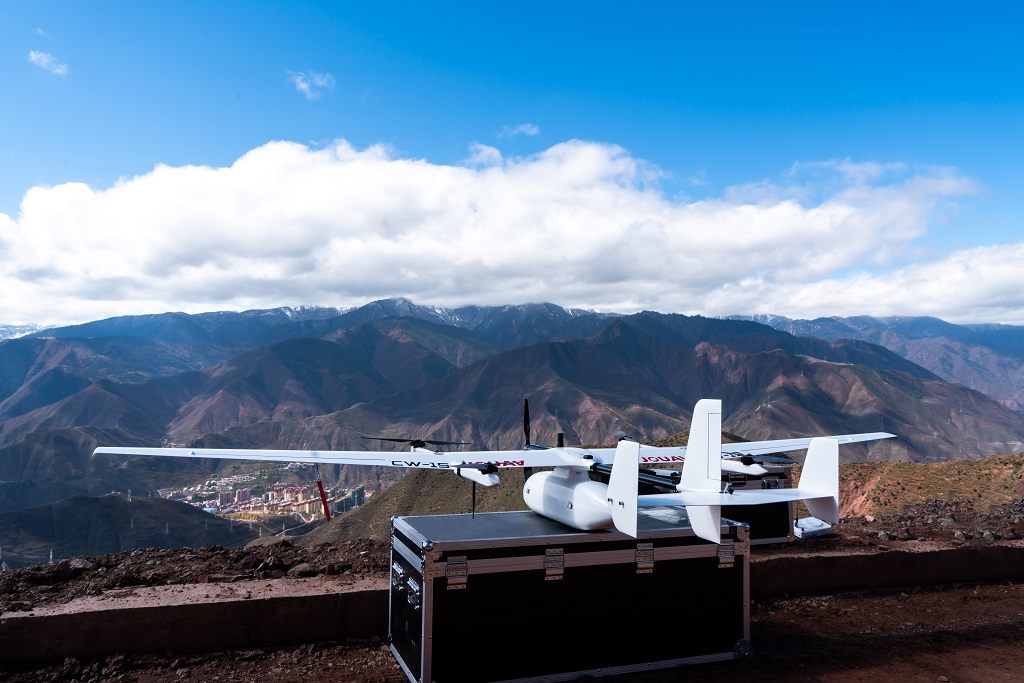
What you can carry: Thermal cameras, zoom cameras, lightweight LiDAR units, multi-sensor payloads.
Who buys these: Inspection companies, surveyors, public safety agencies, and utilities.
5–15kg — Professional and Heavy-Lift
This is the sweet spot for professional cinematography and industrial LiDAR mapping. These drones can carry serious cameras and sensors — but they're still portable enough to transport in a car.
Freefly ALTA X carries up to 15.9 kg on a carbon-fiber frame. Maximum gross takeoff weight is 34.9 kg. It folds to 30% of its full size for transport. Flight time with a heavy cinema rig drops to around 25 minutes.
JOUAV PH-20 is a hexacopter with a 10kg payload capacity. It's a six-motor design with motor redundancy. Flight time is up to 100 minutes empty—with full capacity, expect around 55 minutes.
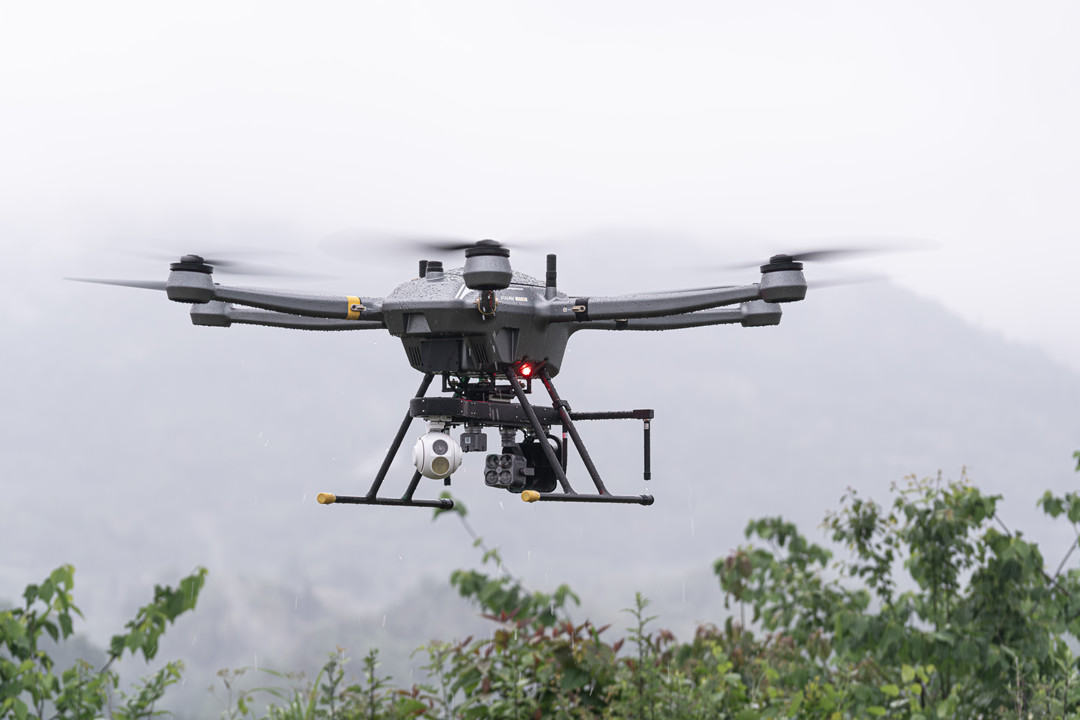
What you can carry: LiDAR systems, EO/IR gimbals, and multispectral cameras.
Who buys these: Film production houses, LiDAR surveying firms, research institutions.
15–50kg — Industrial and Cargo
This is where things get serious. These drones are built for heavy lifting—cargo delivery, firefighting, and large-scale agriculture.
DJI FlyCart 30 carries 30 kg with dual batteries and 40 kg with a single battery. The range is 28 km without a payload and 16 km with a full payload.
The JOUAV CW-80E is a VTOL fixed-wing drone with a 25kg payload capacity and a 100kg MTOW. It features an oil‑electric hybrid powertrain for extended endurance. Flight time reaches up to 10 hours with optional long-range capabilities of 100/200 km.
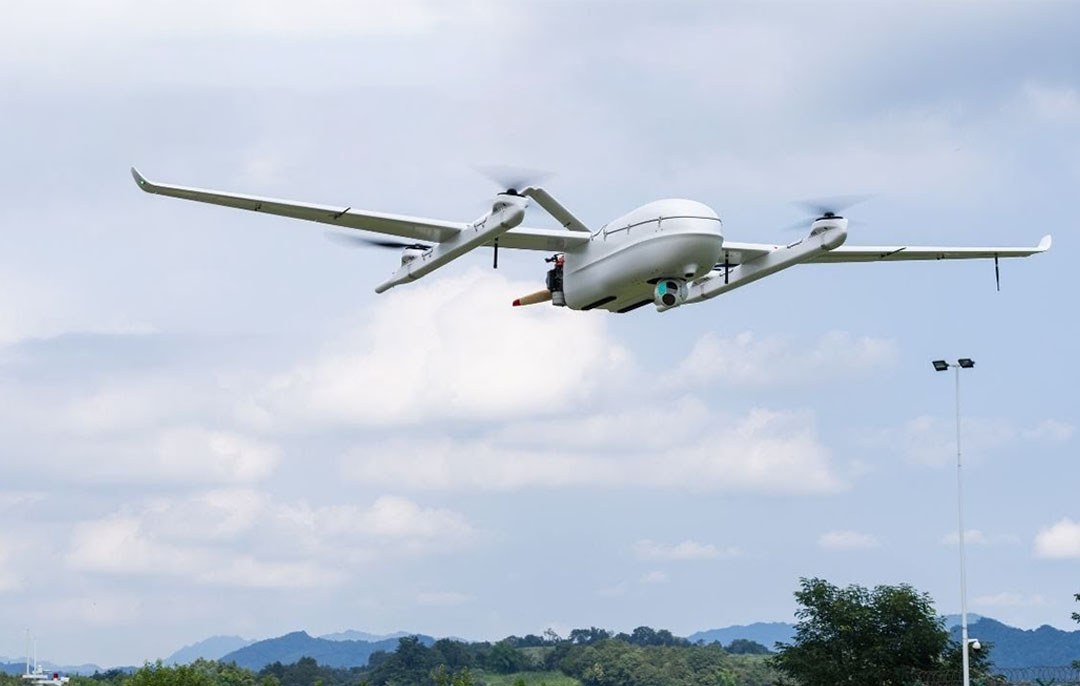
Who buys these: Logistics companies, agricultural operators, and emergency response teams.
50–100kg — Heavy Industrial
Now we're talking serious lifting.
Griff 300 is an octocopter that weighs 75kg itself and can carry up to 225kg (496 lbs). Flight time is 30–45 minutes depending on payload. It's essentially a flying platform capable of lifting a person.
DJI FlyCart 100 carries up to 100kg and is priced around $12,500. It features enhanced wing design and high-torque motors.
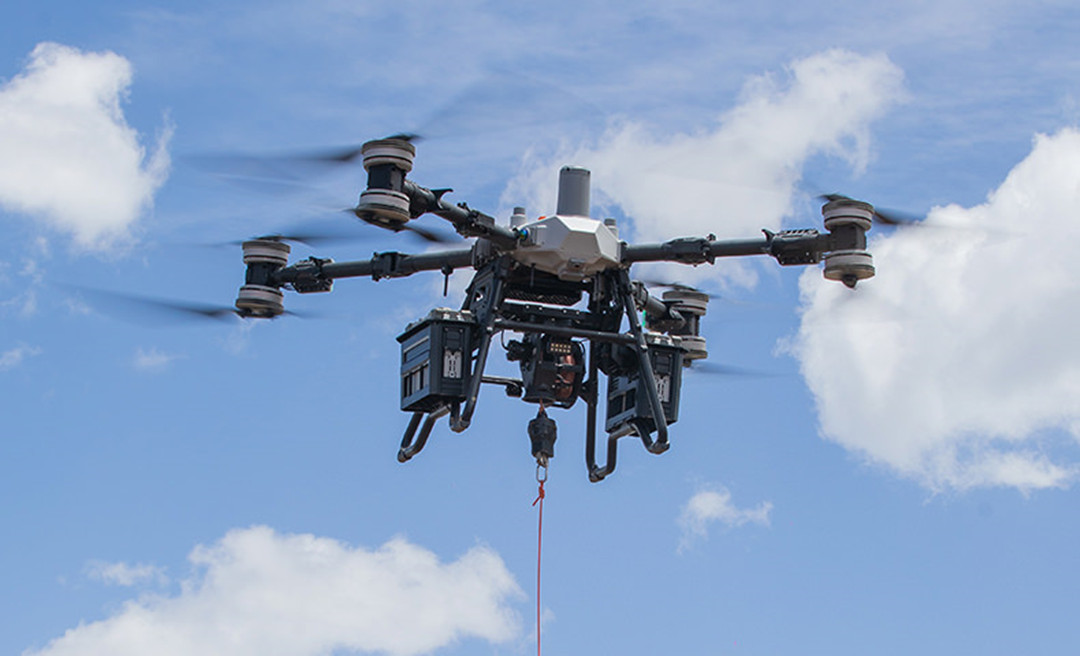
The HZH Y100 is another 100kg-class platform with 60-minute flight time.
What you can carry: Heavy cargo, palletized freight, medical cold-chain containers, firefighting equipment.
Who buys these: Military logistics, disaster response, heavy industry, cargo operators.
100–200kg+ — Ultra Heavy-Lift
This is the top tier. These aren't drones anymore — they're autonomous cargo aircraft.
Windracers ULTRA can carry over 100 kg across 2,000 km. The company is working to increase payload to 200kg over the same range.
DJI FlyCart 200 carries 200 kg as a single unit and up to 600 kg when four units fly together. Priced around $18,800**. The T200 (agricultural variant) is priced at **CNY 99,000 (~$14,500).
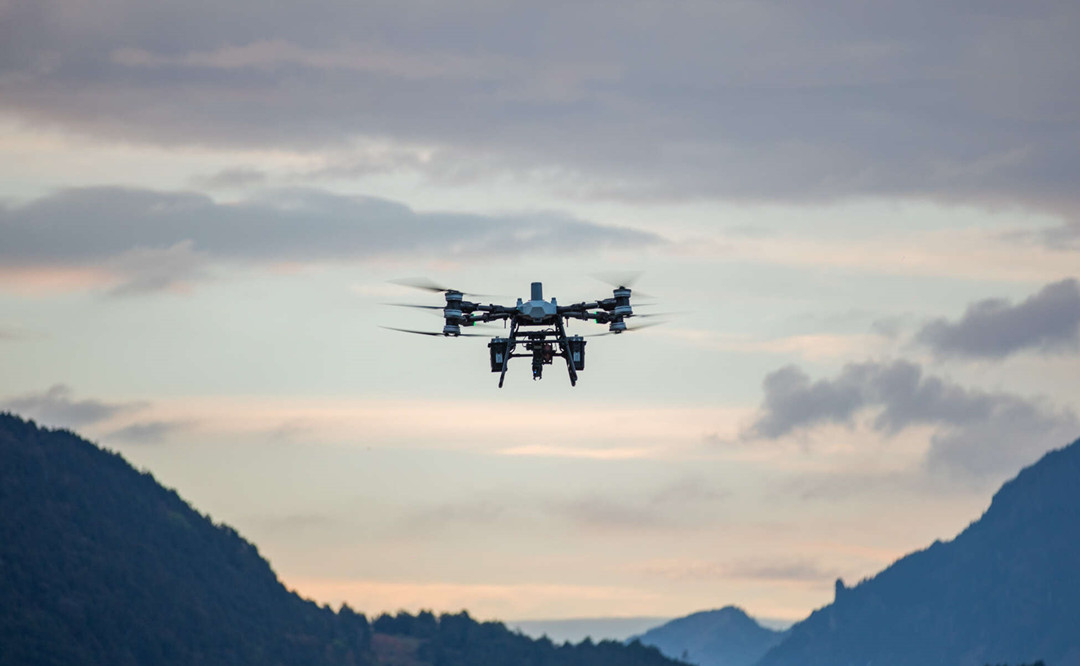
BonV Aero has scaled from 10kg to 200kg and is targeting 400–500kg as a step toward human transport.
What you can carry: Heavy freight, military supplies, humanitarian aid, construction materials.
Who buys these: Defense, logistics, humanitarian organizations, heavy industry.
Market Context — This Sector Is Growing Fast
The heavy-lift cargo drone market was valued at $2.8 billion in 2025** and is expected to reach **$18.6 billion by 2034 at a 23.4% CAGR.
The heavy-lift delivery drones market is growing even faster — from $236 million in 2025 to $1,937 million in 2032 at a 35.8% CAGR.
The message is clear: payload capacity isn't a niche spec anymore. It's becoming the primary buying criterion for a growing number of operators.
Next, let's look at how payload actually affects flight performance—because a drone that can carry 10 kg but only flies for 8 minutes isn't useful to anyone.
Factors That Affect Drone Payload Capacity
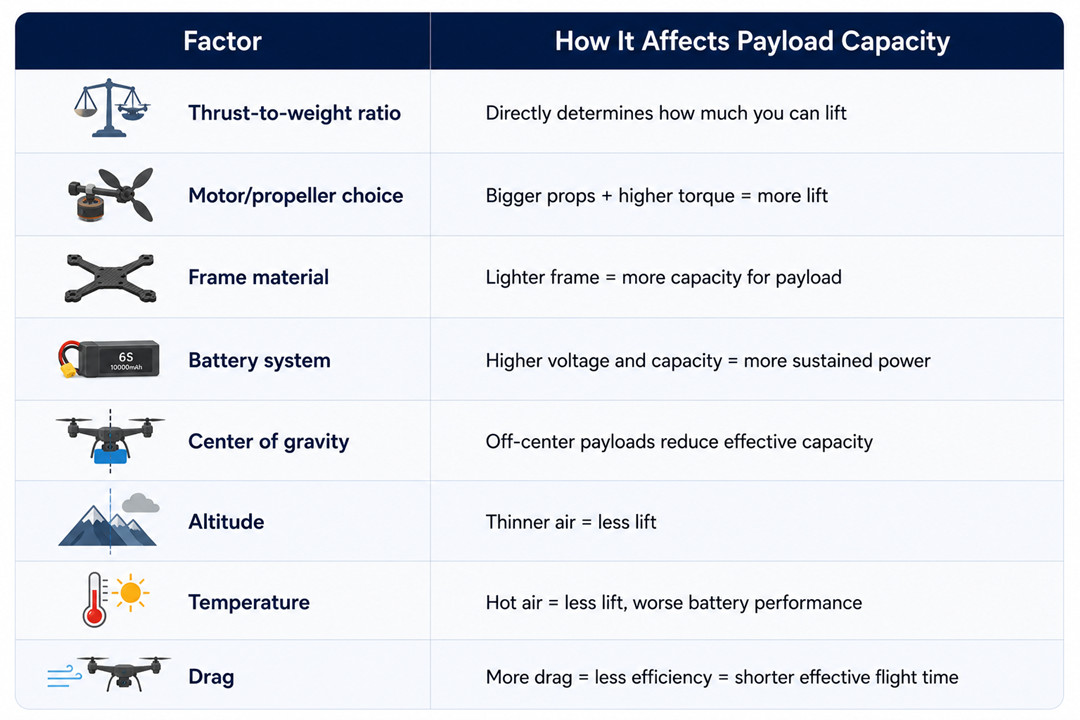
So why can one drone carry 10 kg while another—with similar-sized rotors—struggles with 2 kg?
It's not just about motor power. A whole set of factors determines how much weight a drone can actually lift. Let's walk through each one.
Thrust-to-Weight Ratio—The Golden Rule
This is the single most important factor.
Thrust-to-weight ratio is exactly what it sounds like: how much thrust your motors produce compared to how much the drone weighs.
Here's the rule of thumb: aim for at least 2:1. That means your total thrust should be at least twice your total weight (drone + payload).
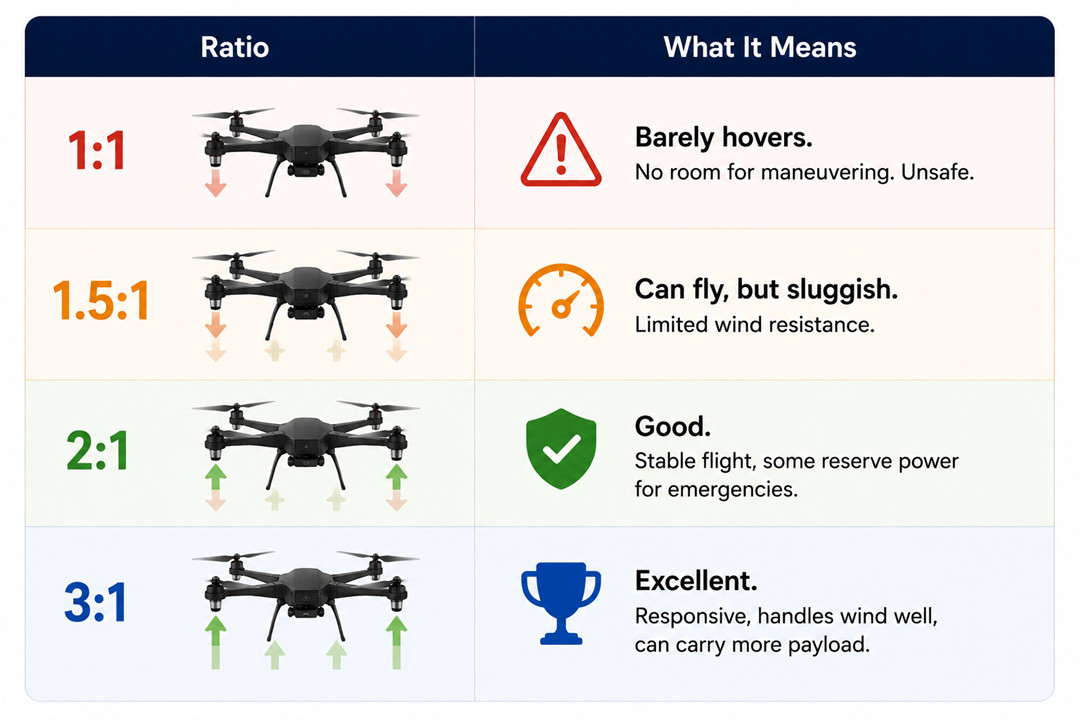
Why 2:1 is the minimum: At 1:1, the drone is hovering at 100% throttle. Any gust of wind, any slight altitude change, and it has no power left to compensate. It's like driving a car with the accelerator floored just to maintain speed — you have no reserve for hills or overtaking.
The math: If your drone weighs 10kg and your motors produce 15kg of total thrust, your ratio is 1.5:1. That's marginal. If you want to carry a 5kg payload, total weight becomes 15kg, and your ratio drops to 1:1. Unflyable.
Motor and Propeller Selection
Motors and propellers work as a system. You can't just upgrade one and expect magic.
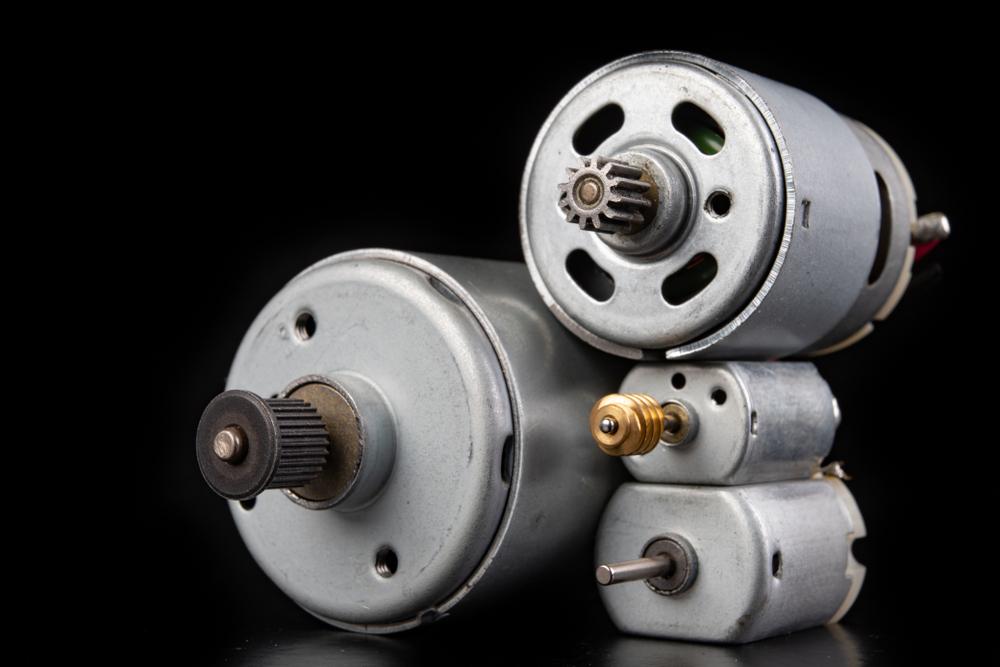
Motor KV rating: Lower KV motors spin slower but produce more torque. They're better for heavy-lift applications. Higher KV motors spin faster but produce less torque — good for speed, not for lifting.
Propeller size and pitch: Larger propellers move more air and produce more thrust at lower RPM. They're more efficient for lifting heavy loads. But they also require more torque from the motors. Propeller pitch affects speed and thrust — higher pitch gives more speed but less static thrust for takeoff.
The trade-off: Bigger props = more lift + lower efficiency in forward flight. It's a balance.
Structural Design — The Frame Matters
The frame isn't just a place to mount things. It determines how much weight the drone can safely carry.
Material: Carbon fiber offers the best strength-to-weight ratio. Aluminum is heavier. Plastic is for toys. An industrial drone with a carbon fiber frame can carry more payload than the same-size drone with a metal or plastic frame—because the frame itself is lighter.
Arm configuration: More arms mean more motors, which means more total thrust. A hexacopter (six arms) can carry more than a quadcopter (four arms). But each extra arm adds weight, which reduces efficiency. There's a point of diminishing returns.
Reinforcement: Heavy payloads create stress on the frame during takeoff, landing, and sharp maneuvers. A frame that's not reinforced for heavy lifting can flex, crack, or snap in flight. That's why industrial heavy-lift drones use thicker, reinforced arms and central plates.
Power System — Battery and ESC
Motors need power. The power system determines how much current can flow to the motors—and for how long.
Battery capacity (mAh): Bigger batteries store more energy, which can power heavier payloads for longer. But they're also heavier, which eats into your payload capacity. It's a circular problem.
Battery voltage (S count): Higher voltage systems (6S, 8S, 12S) are more efficient for heavy-lift applications. They deliver the same power with less current, which means thinner wires, less heat, and lower losses.
ESC (Electronic Speed Controller) rating: ESCs must be rated for the current your motors draw under full load. Under-spec ESCs overheat and fail — often at the worst possible moment.

The hybrid option: Some industrial drones use gas-electric hybrid powertrains. They combine the efficiency of a gas engine with the controllability of electric motors. These can carry heavier payloads and fly much longer than pure electric systems — at the cost of complexity and maintenance.
Center of Gravity (CoG) — The Overlooked Factor
This is where a lot of builds go wrong.
Payloads aren't just weight—they're weight at a specific location. If you mount a 3kg LiDAR sensor on the front of the drone, the center of gravity shifts forward. The drone has to work harder to stay level, which burns extra battery and can make the drone unstable.
Why CoG matters:
- Stability: An off-center payload makes the drone harder to control
- Efficiency: The flight controller constantly compensates, wasting power
- Safety: Extreme CoG shifts can make the drone unflyable or cause it to flip on takeoff
The rule: The payload's center of gravity should align with the drone's center of gravity. If it doesn't, you need to counterbalance with weight on the opposite side — which reduces your effective payload capacity.
JOUAV insight: We recommend balancing your payload before every flight. Even a 200g shift in CoG can significantly affect flight performance and battery life.
Environmental Factors
The same drone that carries 10kg at sea level on a calm day might only carry 6kg at high altitude in windy conditions.
Altitude: Air gets thinner at higher elevations. Thinner air means less lift from your propellers. As a rule of thumb, you lose about 3% of thrust for every 1,000 feet (300 meters) above sea level. At 10,000 feet, you've lost 30% of your lifting capacity.
Temperature: Hot air is less dense than cold air. On a 40°C day, your drone will produce less thrust than on a 10°C day. Batteries also perform worse in extreme heat and cold.
Humidity: High humidity means more water vapor in the air, which actually reduces air density. The effect is smaller than altitude or temperature, but it's real.
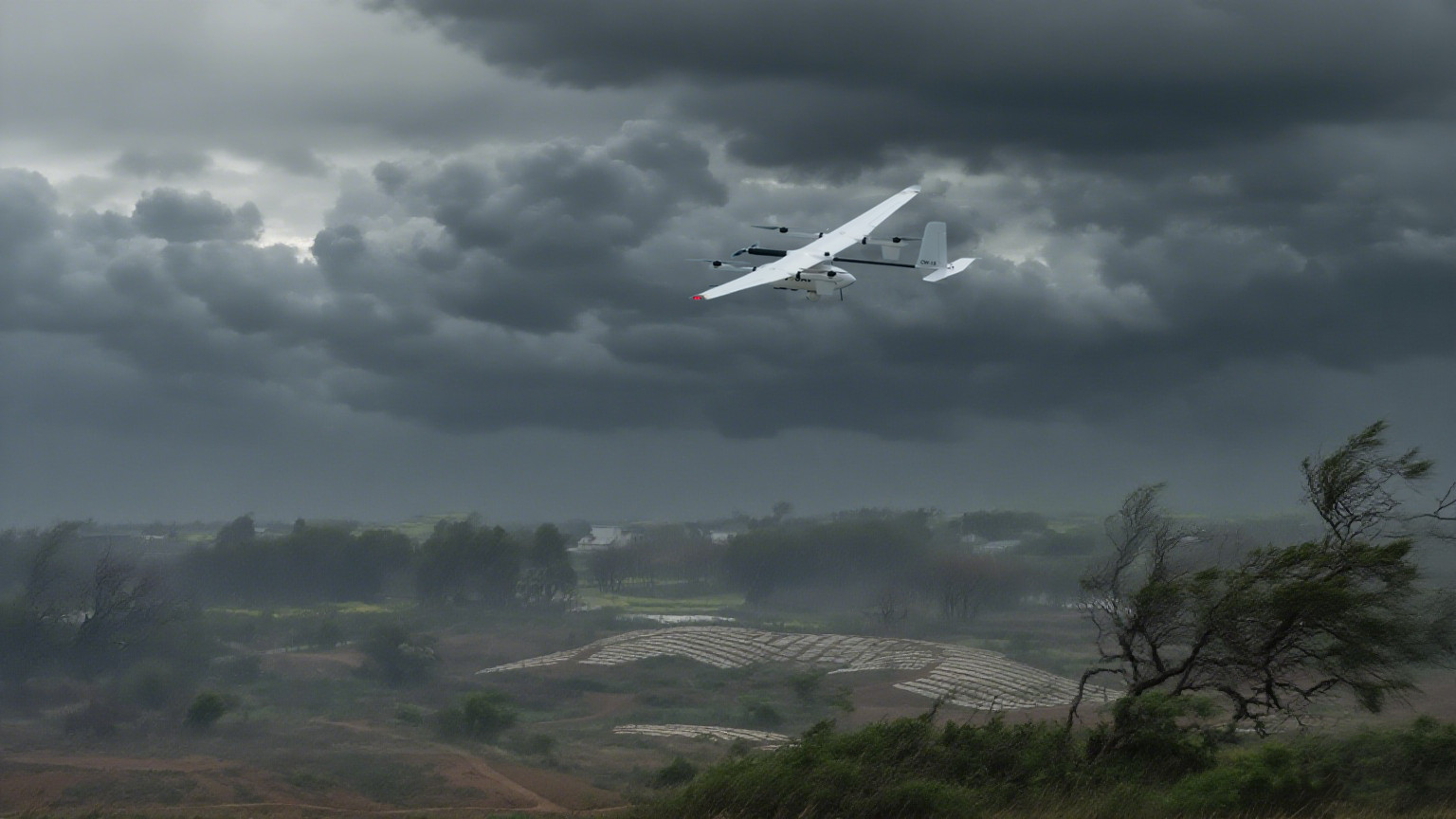
Wind: Wind doesn't change your payload capacity directly, but it forces the drone to work harder to maintain position. That burns battery faster and reduces effective flight time—so the practical payload capacity (the amount you can carry for a useful mission) drops in windy conditions.
Aerodynamic Drag
This one gets less attention than it deserves.
When a drone flies forward, the payload creates drag. A sleek camera payload might add little drag. A boxy cargo container might add a lot. More drag means more power needed to maintain speed — which reduces flight time and effective payload capacity.
What creates drag:
- Large frontal area (flat surfaces facing forward)
- Non-aerodynamic shapes (boxes, containers, bulky sensors)
- Uncovered or exposed payloads
What you can do: Streamline your payload. Use covers or fairings where possible. Mount payloads close to the drone body to reduce exposed surface area.
A Quick Summary
Types of Drone Payloads
Now we get to the good stuff. The payload is why you bought the drone in the first place — and there are a lot of options out there.
Let's walk through the main categories, with real examples of what's available in 2026.
Imaging Payloads — Cameras, Sensors, and Everything That Sees
This is the biggest category by far. If your drone is taking pictures, measuring light, or building 3D models, it's carrying an imaging payload.
RGB / Optical Cameras
These are standard visual cameras — the kind you'd use for photography, videography, or basic inspection. They range from 12MP sensors on consumer drones to 100MP+ sensors on professional platforms.
The JOUAV CW-15, for example, pairs a LiDAR sensor with dual 61MP RGB cameras. That's survey-grade imaging in a single payload.
What they're used for: Real estate photography, infrastructure inspection, construction monitoring, general aerial documentation.
Thermal / Infrared Cameras
Thermal cameras detect heat signatures—anything that's warmer or cooler than its surroundings. They're essential for search and rescue, firefighting, and electrical inspection.
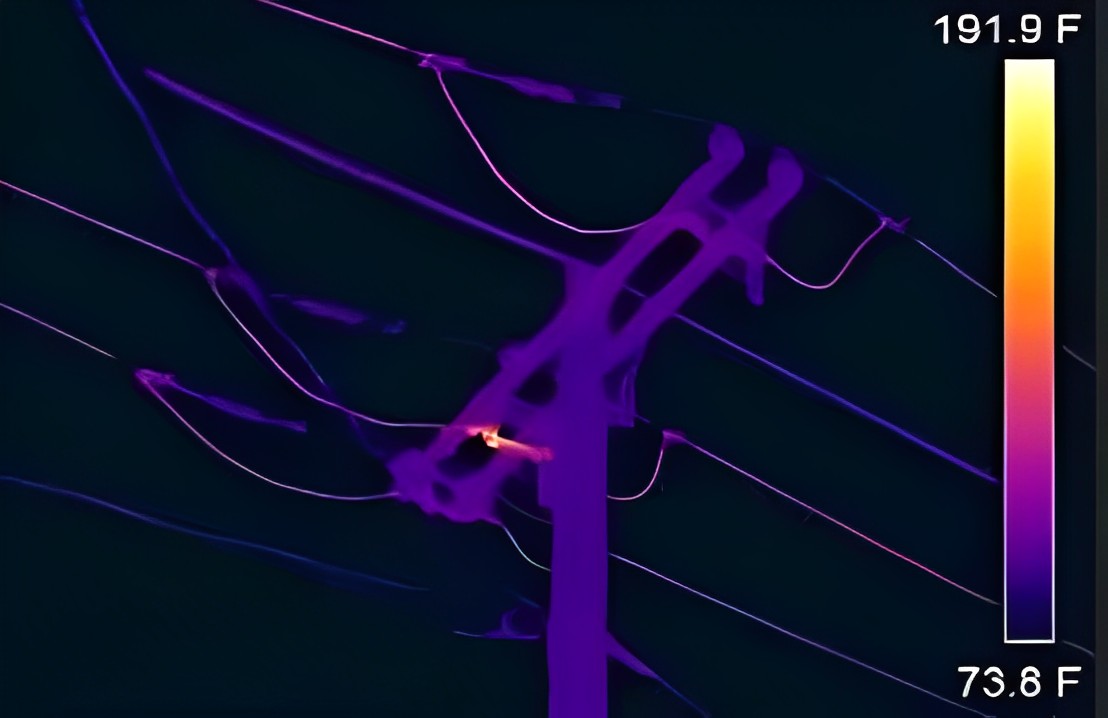
The Teledyne FLIR Hadron 640R is a common choice for military and public safety drones, delivering day and night imaging. For industrial gas leak detection, optical gas imaging (OGI) cameras are becoming more common — they can visualize methane and other harmful gases in real time.
What they're used for: Finding missing people at night, spotting overheating electrical equipment, detecting gas leaks, firefighting (seeing through smoke), wildlife monitoring.
Multispectral and Hyperspectral Cameras
These cameras capture light across multiple bands beyond what the human eye can see. Multispectral typically covers 5–10 bands; hyperspectral covers hundreds.
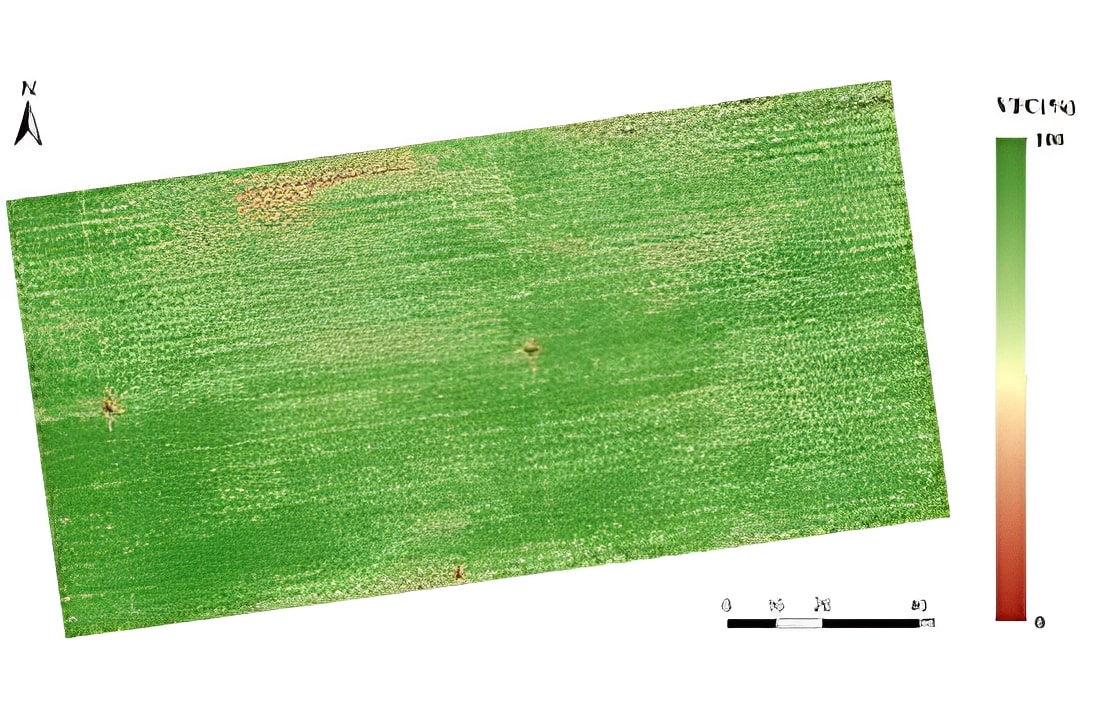
They're the backbone of precision agriculture. A multispectral camera can tell you which parts of a field are stressed, which are healthy, and where to apply fertilizer or pesticide. The drone market is increasingly seeing integration of multispectral, hyperspectral, LiDAR, optical, and thermal sensors as standard payload options.
What they're used for: Crop health monitoring, environmental assessment, mineral exploration, and forestry management.
LiDAR (Light Detection and Ranging)
LiDAR fires laser pulses at the ground and measures how long they take to bounce back. The result is a dense 3D point cloud — essentially a digital twin of the terrain below.
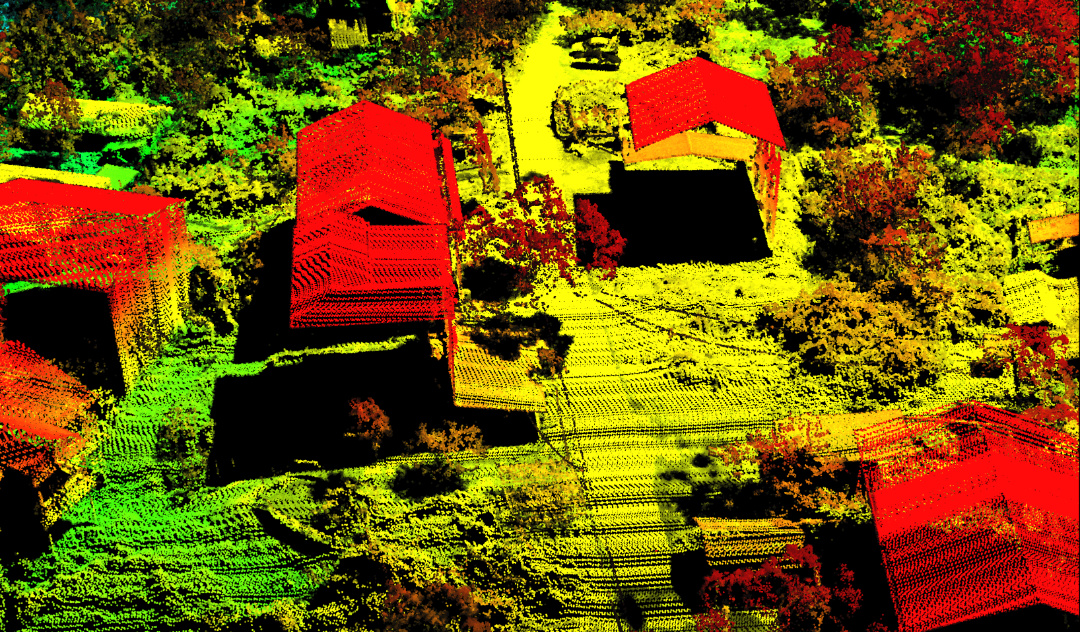
The JoLiDAR-120G can achieve 5 cm absolute accuracy from 300 meters altitude. Detection range goes up to 1,800 meters. It captures up to 16 returns per pulse, allowing it to see through vegetation to the ground below.
In February 2025, RIEGL launched the VUX-240, a compact LiDAR payload for commercial UAVs delivering high-density point clouds for terrain mapping. Delair followed in May 2025 with a high-resolution LiDAR payload for its DT-series drones.
What they're used for: Surveying and mapping, forestry (measuring tree height and canopy density), archaeology (finding hidden structures), construction site monitoring, flood modeling.
Gimbaled Camera Systems
A gimbal is a stabilized mount that keeps the camera steady regardless of how the drone moves. Most professional imaging payloads include a gimbal as standard.
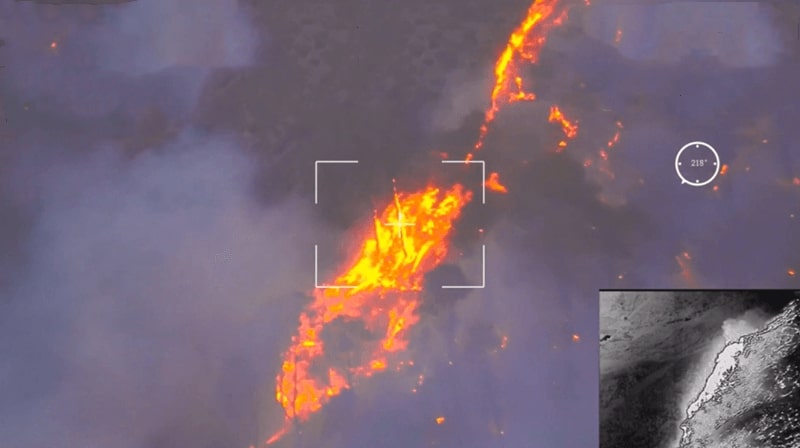
Multi-sensor gimbals, combining RGB, thermal, and zoom in one unit—are increasingly common. The HLM platform supports a wide range of gimbaled cameras, LiDAR systems, and custom sensor arrays.
What they're used for: Any mission requiring stable, high-quality imagery—which is most of them.
Sensor Payloads — Measuring the World
Not all payloads take pictures. Some measure things.
Gas Detectors
Drones equipped with gas sensors can detect methane, carbon dioxide, and other gases from the air. Researchers at the University of São Paulo are developing AI-powered drones with gas sensors that act as an airborne "electronic nose".
The Cellen H2-6 multirotor features a modular payload architecture that allows quick field swapping between gas sensors, EO/IR, LiDAR, and high-resolution cameras.
A methane gas imaging system mounted to a UAV can perform real-time detection at distances up to 10 meters while airborne.
What they're used for: Pipeline leak detection, landfill monitoring, industrial facility inspection, environmental compliance.
Radiation Sensors
Drones can carry radiation detectors for nuclear facility inspection, environmental monitoring, and emergency response after radiological incidents.
What they're used for: Nuclear power plant inspection, disaster response, environmental monitoring, border security.
Magnetometers
Magnetometers detect magnetic fields. They're used for mineral exploration, detecting buried metal, and locating unexploded ordnance (UXO).
What they're used for: Mining exploration, archaeological surveying, UXO detection, geophysical mapping.
Ultrasonic and Acoustic Sensors
These measure distance, detect objects, or capture sound signatures. Some military drones carry acoustic sensors for detecting and locating gunfire or vehicle movements.
What they're used for: Obstacle avoidance, proximity sensing, military surveillance.
Delivery and Logistics Payloads — Moving Things
This is the fastest-growing payload category. Drones aren't just cameras anymore — they're trucks.
Payload Release Mechanisms
These are the simplest delivery systems: a servo, a latch, and something to drop. JOUAV's drop kit for the PH-20 can carry up to 4 kg of payload and is triggered from the ground control station. It's commonly used for delivering flotation devices to swimmers in distress or dropping medical supplies to inaccessible locations.
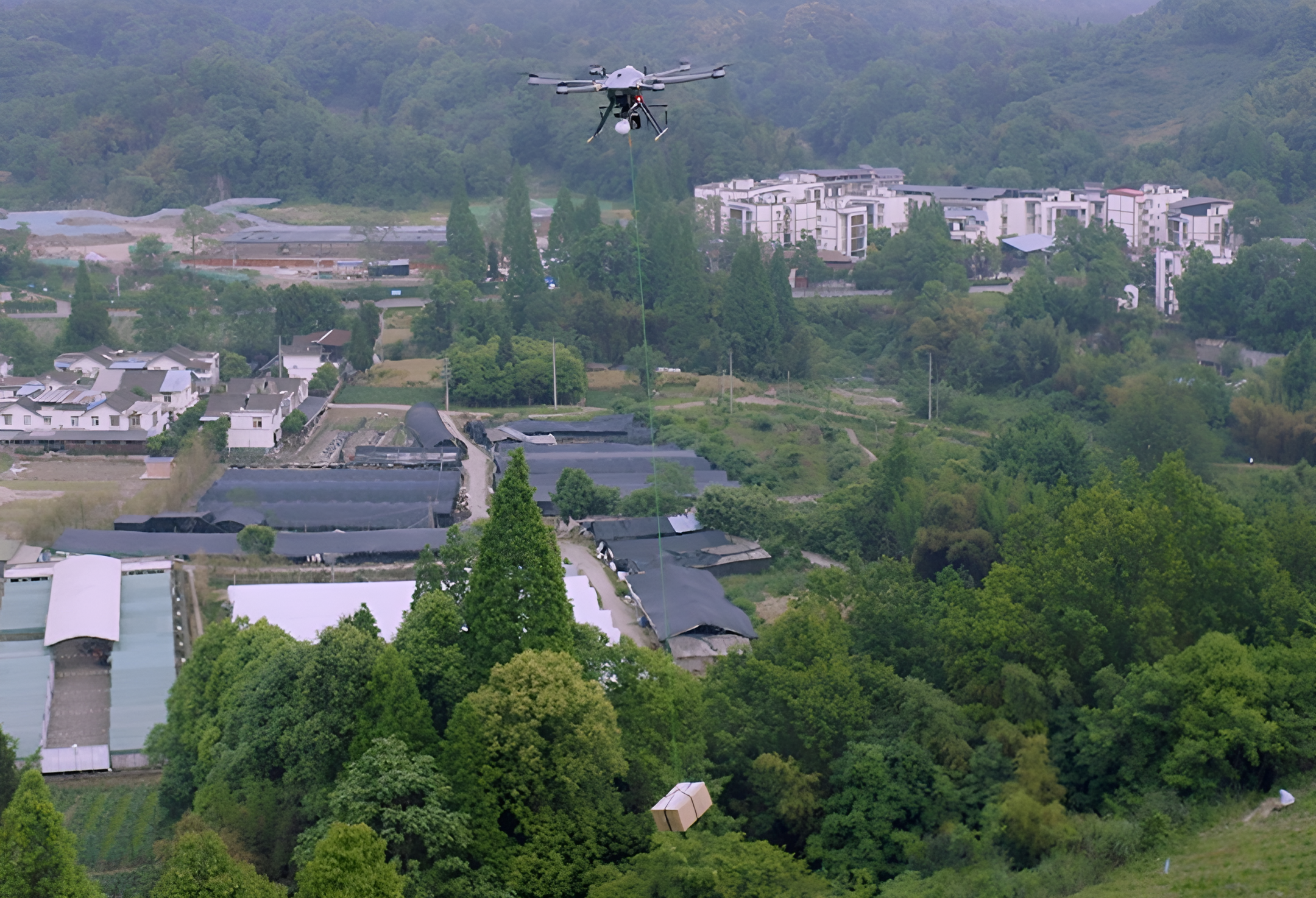
For more advanced applications, autonomous drone payload delivery systems now feature precision-controlled winch mechanisms with programmable stepper motors. These allow for both controlled lowering and high-altitude drops.
What they're used for: Emergency supply delivery, cargo drops, research sample collection, humanitarian aid.
Winch Systems
A winch lowers cargo on a tether without the drone needing to land. This is critical for medical supply delivery to remote or dangerous locations.
The Eayload-10 weighs just 1.1 kg and can handle up to 10 kg of payload with a 25-meter cable. The Eayload-5 is even lighter at 1.26 kg with a 5 kg capacity. Both are compatible with most industrial-grade drones.
DJI's FlyCart 100 features a winch system with a 30-meter cable that retracts at 1.2 meters per second, with both automatic and manual release options. The FlyCart 30 carries 30kg with dual batteries and 40kg with a single battery.
What they're used for: Medical supply delivery, cargo transport to ships or offshore platforms, disaster response, military logistics.
Cargo Boxes and Containers
For logistics operations, standardized cargo containers are becoming more common. The XAG P150 Max — primarily an agricultural drone — also supports logistics missions by switching between modular task systems.
What they're used for: Commercial cargo delivery, military resupply, humanitarian logistics.
Agricultural Payloads — Spraying, Seeding, and Spreading
Agriculture is one of the largest commercial drone markets, and the payloads are getting bigger.
Sprayers
Agricultural drones carry liquid tanks for pesticide, herbicide, and fertilizer application. The XAG P150 Max features an 80kg payload capacity and can carry a 70-liter liquid tank. The JH-AGH95 carries a 95L liquid tank with a spray width of up to 15 meters, delivering 35 hectares per hour.
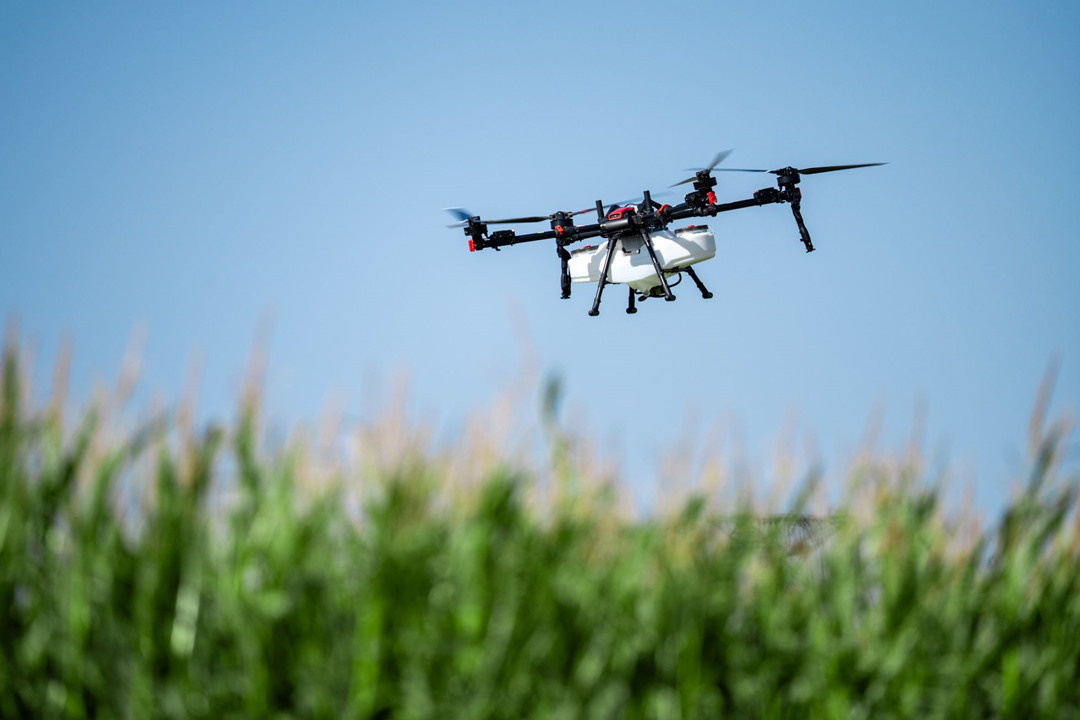
What they're used for: Precision spraying of crops, reducing chemical use and improving efficiency.
Spreaders / Seeders
Some agricultural drones spread granular materials — seeds, fertilizer, or bait. The XAG P150 Max supports both spraying and spreading functions.
What they're used for: Seeding, fertilizing, pest control bait application.
Multi-Task Agricultural Systems
The most advanced agricultural drones are now multi-task platforms. The XAG P150 Max can switch between spraying, spreading, field mapping, and logistics within minutes. The modular task systems mean one drone can do the work of several.
What they're used for: Full-service farm operations — spraying one day, mapping the next, spreading fertilizer the day after.
Public Safety and Specialized Payloads
These are the payloads you see on police drones, search and rescue aircraft, and emergency response platforms.
Speakers / Loudspeakers
A drone-mounted speaker turns the aircraft into a flying public address system. JOUAV's H10 speaker is designed specifically for the PH-20 for public safety missions. The H10 loudspeaker has a range of up to 300 meters and supports audio playback, real-time announcements, and the uploading of recordings.
What they're used for: Crowd control, emergency announcements, search and rescue coordination, and public safety messaging.
Searchlights / Spotlights
Spotlights illuminate search areas, guide ground teams, and signal to people in distress. JOUAV's T60 spotlight is built for the PH-20, ideal for search and rescue and public safety operations. The CZI LP12 Searchlight & Speaker System transforms a DJI Matrice 30 into a powerful aerial lighting and public address platform.
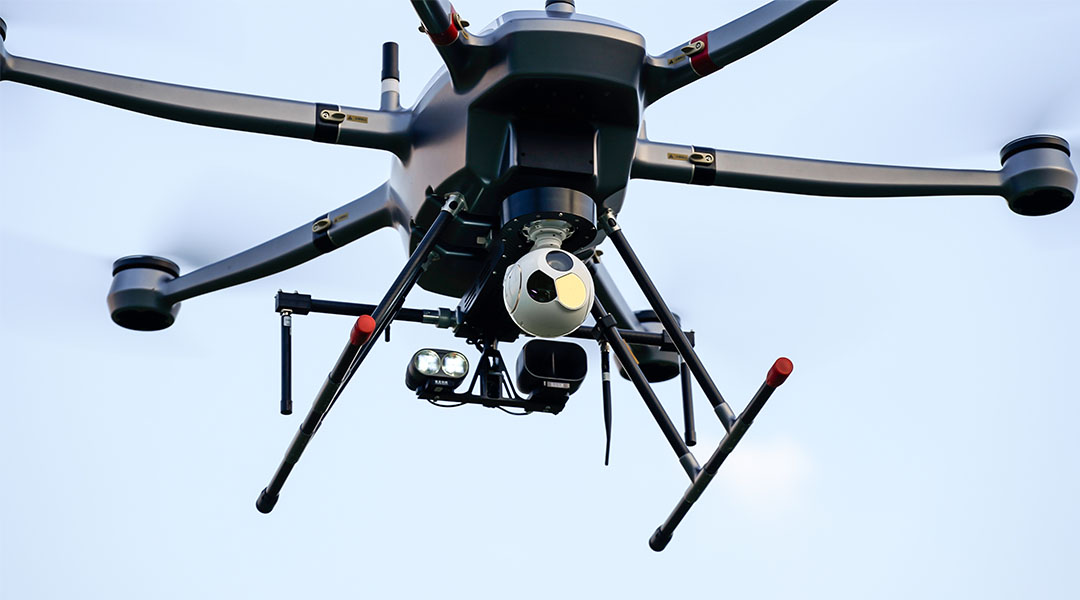
What they're used for: Night search and rescue, tactical operations, crowd monitoring, emergency response.
Sirens and Warning Systems
Some public safety drones carry sirens or warning systems for crowd control and emergency alerts.
What they're used for: Crowd control, emergency alerts, traffic management.
Military and Defense Payloads
This category is less visible to civilian operators, but it's where a lot of payload innovation happens.
EO/IR (Electro-Optical / Infrared) Systems
These combine daylight cameras with thermal imaging in a single stabilized gimbal. The Skydio X10D delivers a 48MP telephoto camera for tactical ISR missions. The Red Cat Teal drone is equipped with a Teledyne FLIR Hadron 640R for day-and-night operations.
What they're used for: Surveillance, reconnaissance, target acquisition.
Signals Intelligence (SIGINT) and Electronic Warfare (EW) Payloads
These intercept, analyze, or disrupt electronic signals. The ScanEagle UAS carries SIGINT payloads, communications relay, and electronic warfare capabilities. The LAMIA VTOL supports multi-sensor payloads, including advanced communication suites.
What they're used for: Intelligence gathering, communications interception, electronic attack, counter-drone operations.
Laser Designators
Some military drones carry laser designators to mark targets for precision-guided munitions. The ScanEagle recently received laser-designation payload upgrades.
What they're used for: Precision targeting, forward air control.
Hyperspectral Optical Radar (HSOR)
AV recently unveiled a new HSOR payload for its JUMP 20 VTOL platform. Hyperspectral sensing adds another dimension to military reconnaissance.
What they're used for: Advanced reconnaissance, material identification, camouflage detection.
A Quick Summary Table
The takeaway: The PH-20 and CW-15 lose roughly 45% and 55% of their flight time at max payload, respectively. That's better than many competitors — but it's still a significant hit. Plan your missions accordingly.
The Manufacturer "Gotcha" — Empty Flight Time vs. Real Flight Time
Here's something you need to know: manufacturers almost always quote flight time without payload.
That 55-minute number on the Matrice 350 RTK spec sheet? That's with no payload, flying at a steady 8 m/s in zero wind. Add a 2.7 kg payload, and you're looking at maybe 25–30 minutes of real-world flight time.
Same with the Freefly ALTA X. The 50-minute number is empty. With a typical cinema payload, you're closer to 25 minutes.
What to ask before you buy:
- "What's the flight time with my payload?"
- "Is that measured at sea level or at altitude?"
- "Is that in hover or forward flight?"
- "What's the flight time with a 20% battery reserve?" (You should never fly to 0%)
If the salesperson can't answer these questions clearly, that's a red flag.
The 20% Buffer Rule
Here's a rule worth remembering: never fly at maximum payload.
Why? Three reasons.
First, safety. A drone at 100% capacity has no reserve power. A gust of wind, a slight altitude change, or an emergency maneuver — and you're out of power.
Second, battery health. Flying at maximum throttle drains batteries faster and wears them out sooner. Lithium polymer batteries degrade faster when pushed hard.
Third, real-world conditions. The spec sheet assumes sea level, calm wind, and a fresh battery. Real missions happen at altitude, in wind, with batteries that aren't brand new.
The rule: If you need to carry 8 kg, buy a drone rated for at least 10 kg. That 20% buffer will save you from a lot of unpleasant surprises.
How to Estimate Flight Time With Your Payload
There's no perfect formula, but here's a rough method:
- Start with the manufacturer's empty flight time (and be skeptical).
- Find a payload vs. flight time chart for your specific drone (some manufacturers publish them).
- If no chart exists, use this rule of thumb: For every 100g of payload, subtract 1–2 minutes of flight time.
Example: A drone flies 40 minutes empty. You add a 500g camera.
- Conservative estimate: 500g ÷ 100g × 1.5 minutes = 7.5 minutes lost
- Estimated flight time: 40 - 7.5 = 32.5 minutes
Reality check: This is a ballpark figure. Actual results depend on motor efficiency, battery health, flight style, and environmental conditions. Always test with your actual payload before planning critical missions.
The JOUAV Perspective
At JOUAV, we design our drones with real missions in mind — not just spec sheet numbers.
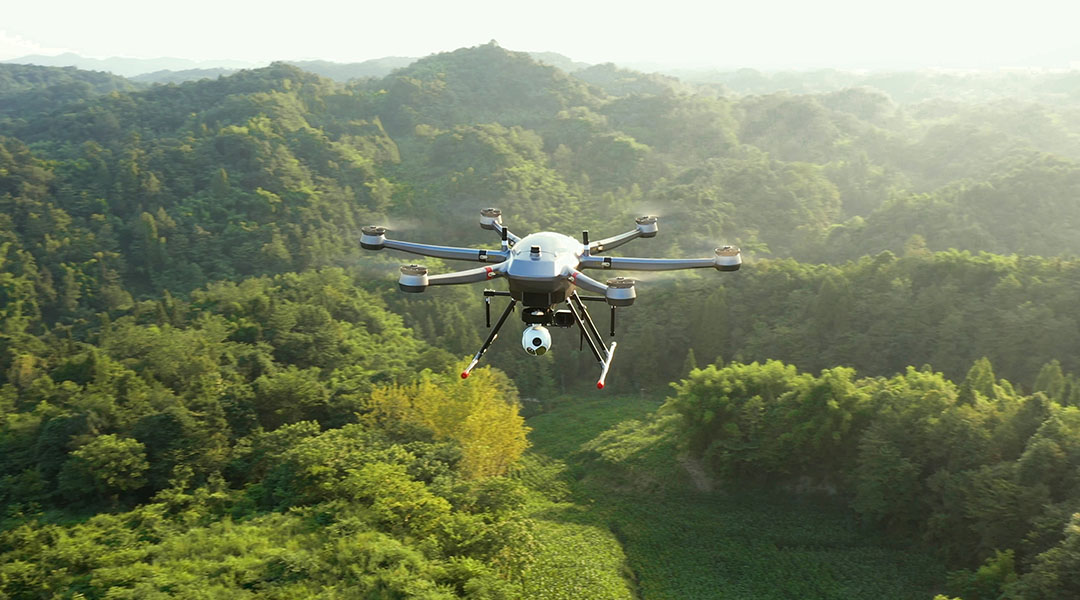
The PH-20 flies 100 minutes empty and 55 minutes with a 10 kg payload. That's a 45% reduction — significant, but still practical for most industrial missions.
The CW-15 flies 180 minutes empty and 100 minutes with a 3 kg payload. The VTOL fixed-wing design means it's more efficient in forward flight than a multirotor, so the payload penalty is less severe — about a 33% reduction.
The CW-80E takes a different approach. With a hybrid powertrain, it achieves up to 10 hours of flight time. The endurance is so long that payload has a proportionally smaller impact on mission feasibility.
The rule: Don't buy a payload because it looks cool. Buy it because it solves a specific problem.
Step 2 — Define Your Payload Requirements
Once you know your mission, get specific about what the payload needs to do.
What does your payload actually need?
- What resolution? 4K? 12MP? 60MP?
- What sensor type? RGB, thermal, multispectral, LiDAR?
- What field of view? Wide-angle for mapping? Narrow for long-distance inspection?
- What data output? Images? Video? Point clouds? Real-time streaming?
- What integration? Does it need to talk to the flight controller? Send telemetry? Record metadata?
If you're doing LiDAR:
- What point density do you need?
- What's the required accuracy (vertical, horizontal)?
- How much ground coverage per flight?
If you're doing delivery:
- What's the package weight and size?
- Do you need a winch or a drop mechanism?
- Does the package need temperature control (medical supplies)?
If you're doing inspection:
- What's the smallest defect you need to see?
- Do you need thermal, visual, or both?
- How close do you need to get?
The rule: Write down every requirement. Then rank them: must-have vs nice-to-have. That will save you from buying a payload that's "almost right" — which in practice means "wrong."
Step 3 — Calculate Total Weight
Here's where many buyers go wrong. They look at the payload weight — say, a 2.5kg LiDAR system — and assume that's all they need to carry.
It's not.
Total payload weight includes:
- The sensor or camera itself
- The mounting bracket or gimbal
- Cables and connectors
- Any additional hardware (power supply, data storage, etc.)
The 1.5x rule: Your total payload weight is usually 1.2–1.5× the weight of the sensor alone. Add a gimbal, add cables, add mounting hardware — it adds up.
Example: A 2.5kg LiDAR system might require a 1.5kg mounting kit and gimbal. Total payload weight = 4kg. If you only planned for 2.5kg, you're in trouble.
Step 4 — Choose the Platform
Now you know your mission and your total weight. Time to pick the drone.
Start with the 20% buffer rule. If you need to carry 4kg, look for a drone with at least 5kg payload capacity.
Match the platform to your requirements:
Read More
Picking drone mapping software feels harder than it should be.
Open any review site, and you will see the same ten names repeated: Pix4D, DroneDeploy, DJI Terra, Agisoft Metashape, UgCS. But the recom
Here’s the question every drone pilot hears: How much should I charge?
And here’s the honest answer: $100 to $500 an hour, or $300 to $5,000 per project, depending on what you’re doi

JOUAV Product News and Use Cases
Fixed-Wing VTOL Drones Insights and Industry Trends
Invitations to online demo events
 English
 中文
中文