Drone mapping services can produce far more than aerial photos—orthomosaics, 3D models, point clouds, and elevation data that feed directly into GIS, CAD, and BIM workflows. But ask three providers to
An airborne cargo drone is exactly what it sounds like: an unmanned aircraft built to carry stuff. Not tiny packages for a suburban backyard – real cargo. From medical supplies to industrial parts.
And they are quietly fixing a problem that trucks and planes cannot solve.
The last mile is expensive. Remote areas are hard to reach. Road infrastructure is not everywhere. That is why businesses are turning to cargo transport drones – they fly over traffic, land almost anywhere, and cut delivery times from days to hours.
Whether you call it a cargo delivery drone or an autonomous cargo drone, the idea is the same: move things faster, cheaper, and without a pilot.
This guide covers the models that actually exist, what they cost, and how to pick the right one for your job. No fluff.
Let’s go.
Elroy Air Chaparral
The Elroy Air Chaparral is a hybrid‑electric VTOL designed around one simple idea: separate the cargo from the aircraft. It never lands to load or unload. Instead, it uses a tether system to pick up a pre‑loaded pod (up to 136 kg), flies up to 480 km, and releases the pod at the destination. The onboard turbogenerator recharges batteries in flight, so no ground charging infrastructure is needed.
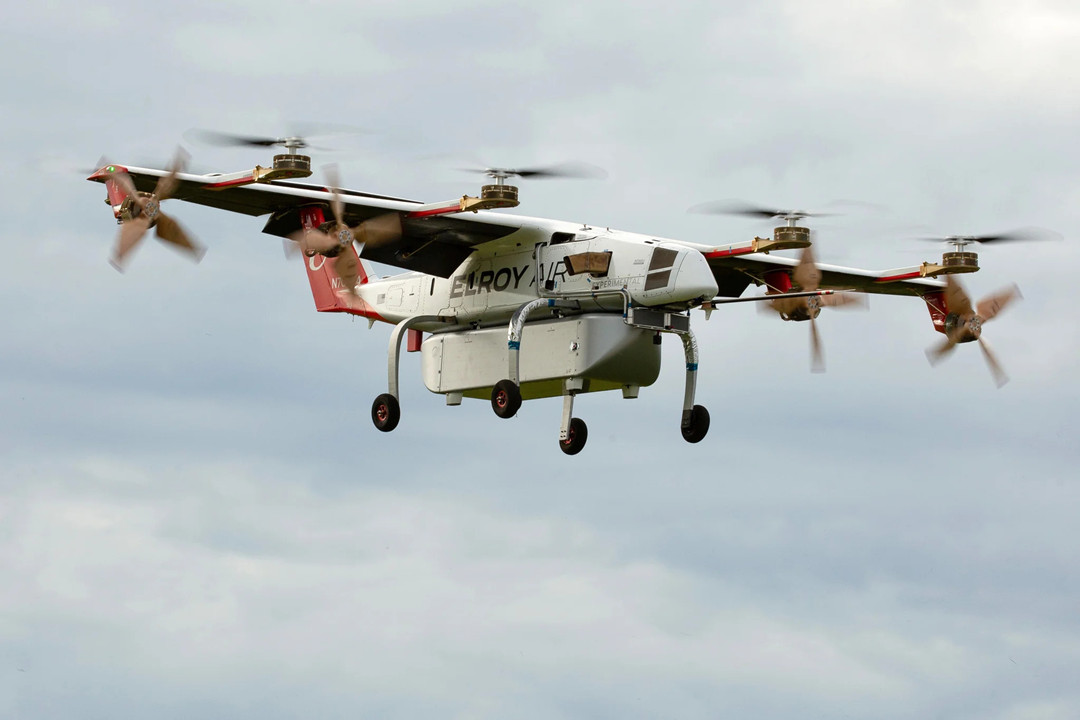
The Chaparral already has over 1,500 units on order from customers, including FedEx, and completed the first fully autonomous point‑to‑point hybrid‑electric cargo delivery in 2025. A $200 million joint venture in Abu Dhabi is scaling production toward 2028.
Who it’s for: Middle‑mile logistics operators moving standardized cargo between warehouses or distribution hubs, especially when fast cargo swaps and zero-landing operations are priorities.
Pipistrel Nuuva V300
The Pipistrel Nuuva V300 (now part of Textron eAviation) is a hybrid‑electric VTOL that uses eight electric motors for takeoff and landing, plus a separate internal combustion engine for cruise. The drone payload is 272 kg; endurance is an exceptional 720 minutes (12 hours). The entire nose opens upward, so a forklift can load up to three Euro pallets directly into the fuselage—no custom handling equipment required.
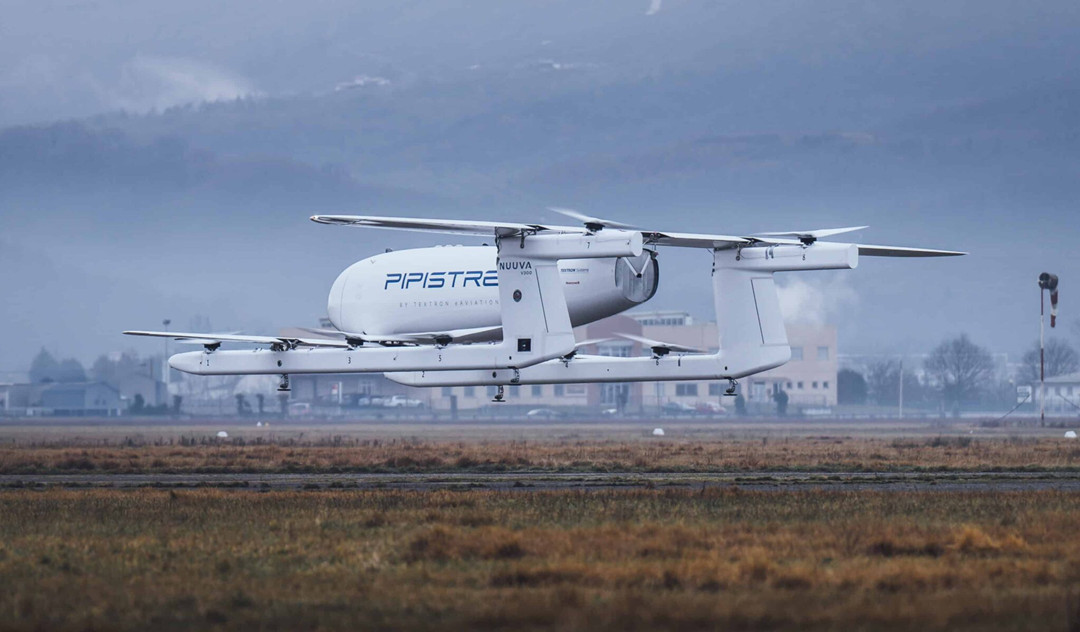
A triple‑redundant Honeywell flight control system improves reliability and supports certification. The long endurance also enables multi-stop regional routes that battery-only drones cannot handle.
Who it’s for: Operators already using Euro pallets who need to move palletized cargo between logistics hubs without runways. Ideal for long, multi‑stop routes where endurance matters more than absolute payload.
ST Engineering DrN‑600
The ST Engineering DrN‑600 takes a practical, no‑frills approach. It is a pure‑electric VTOL with a 100 kg payload and a range of 70–120 km per flight. The front-loading cargo bay (1.5 cubic meters) opens upward like the Nuuva but at a smaller scale, designed for standardized pallets and straightforward ground handling.
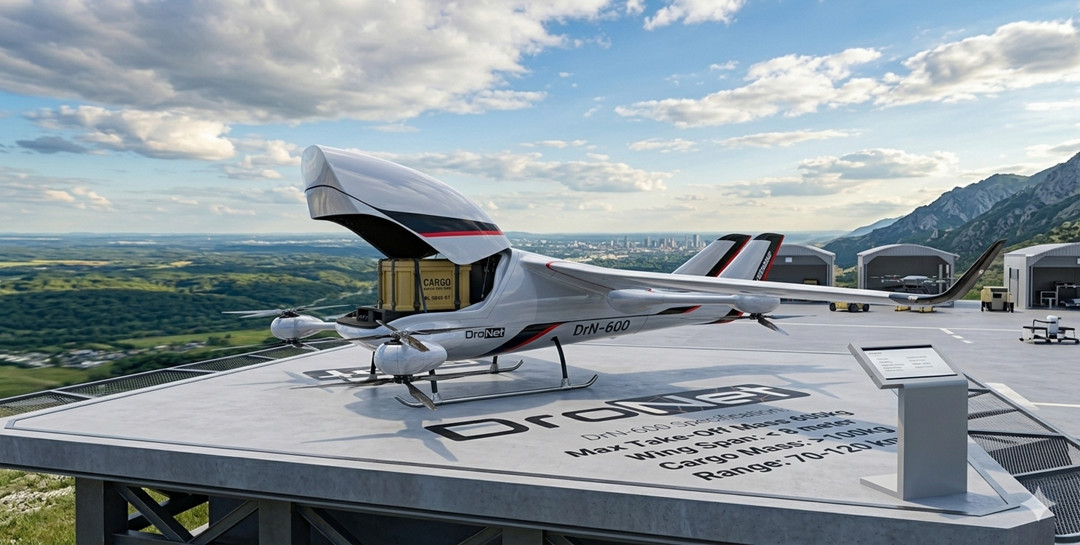
ST Engineering focuses less on extreme performance and more on solving adoption barriers: reliability, certification, and operating cost. Flight testing began in 2026, with certification targeted for 2028. The platform also integrates with digital logistics networks for urban fleet operations.
Who it’s for: Short to medium routes under 120 km, where charging is available at both ends. Best for operators who prioritize simplicity, quiet flight, and easier regulatory approval over long range or heavy payload.
JOUAV CW‑80E
The JOUAV CW‑80E flips the usual trade‑off. Instead of maximizing payload, it prioritizes time in the air. It carries 25 kg—less than the others—but stays airborne for 480 minutes (8 hours) on its 4-stroke EFI engine. That makes it a specialist for missions where persistence matters more than mass.
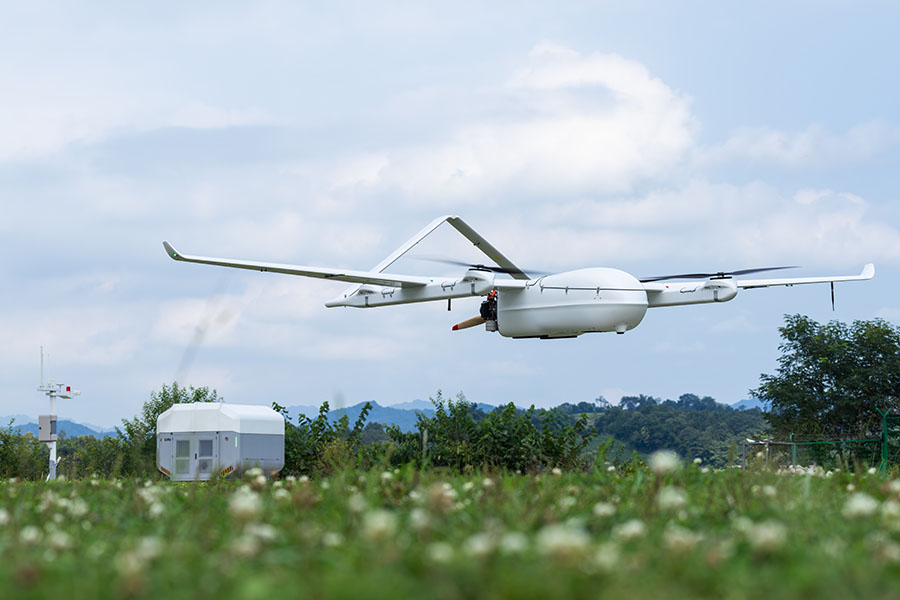
The platform is modular. You can carry cargo and sensors (cameras, LiDAR, SAR) simultaneously, then swap the cargo bay for a full sensor package on the return flight. Long‑range communications reach 200 km, and with a 5,000 m ceiling, it operates in challenging environments.
Who it’s for: Offshore operations, infrastructure monitoring, and emergency response where endurance (not heavy lift) is the priority. Perfect for long‑distance light cargo (medical supplies, small parts) combined with surveillance or inspection on the same flight.
Xfold Dragon H1000
The Xfold Dragon H1000 is a hybrid‑electric heavy‑lifter built for extreme payloads. The Dragon line can lift up to 450 kg – nearly half a metric ton – on its hybrid system, which combines gas and electric power for extended endurance. Without the hybrid, the battery‑only version flies for about 90 minutes; with the gas‑electric system, endurance stretches to over eight hours.
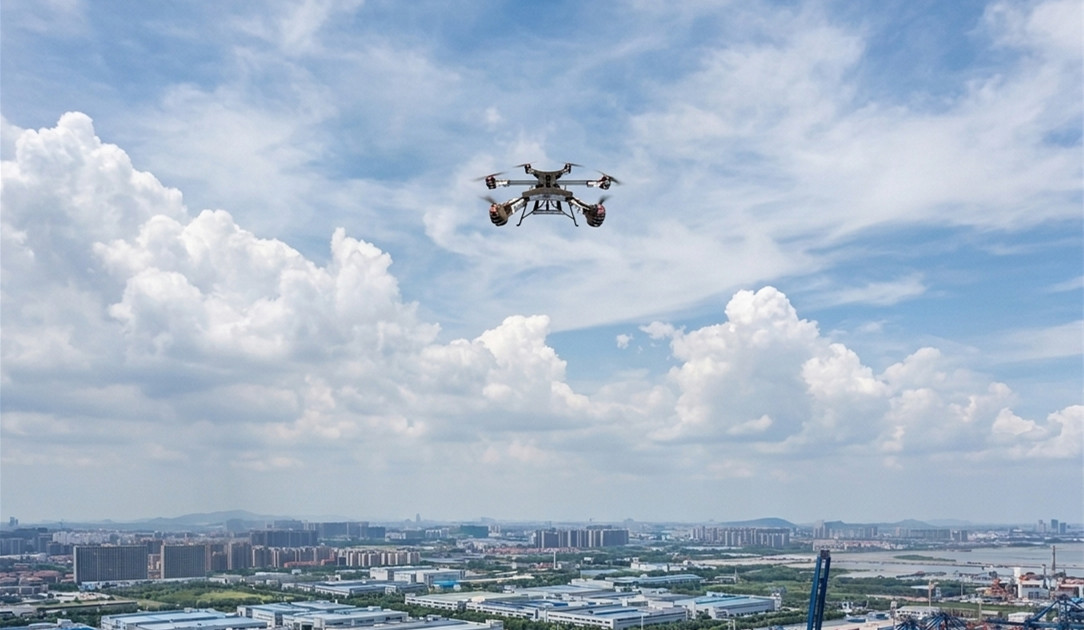
What sets the Dragon apart is its modularity. The same airframe can be reconfigured in minutes from a 450 kg lifter to a long‑duration mapping platform, an agricultural sprayer, or even a firefighting drone. It is built for operators who need one platform to do many different jobs.
Who it’s for: Industrial, military, and disaster response teams that need extreme lifting capacity and the flexibility to swap configurations in the field. Not for short urban deliveries – this is for moving heavy equipment, construction materials, or palletized supplies from unprepared ground.
Airbus Cargo Copter
The Airbus Cargo Copter is currently a full‑scale concept aimed at military and heavy‑logistics missions. Airbus envisions a fuel‑powered VTOL drone capable of carrying over 250 kg of payload across 300 km or more. A sub‑scale demonstrator has already been tested in NATO exercises, proving its ability to operate from ship decks using Airbus’s DeckFinder landing system.
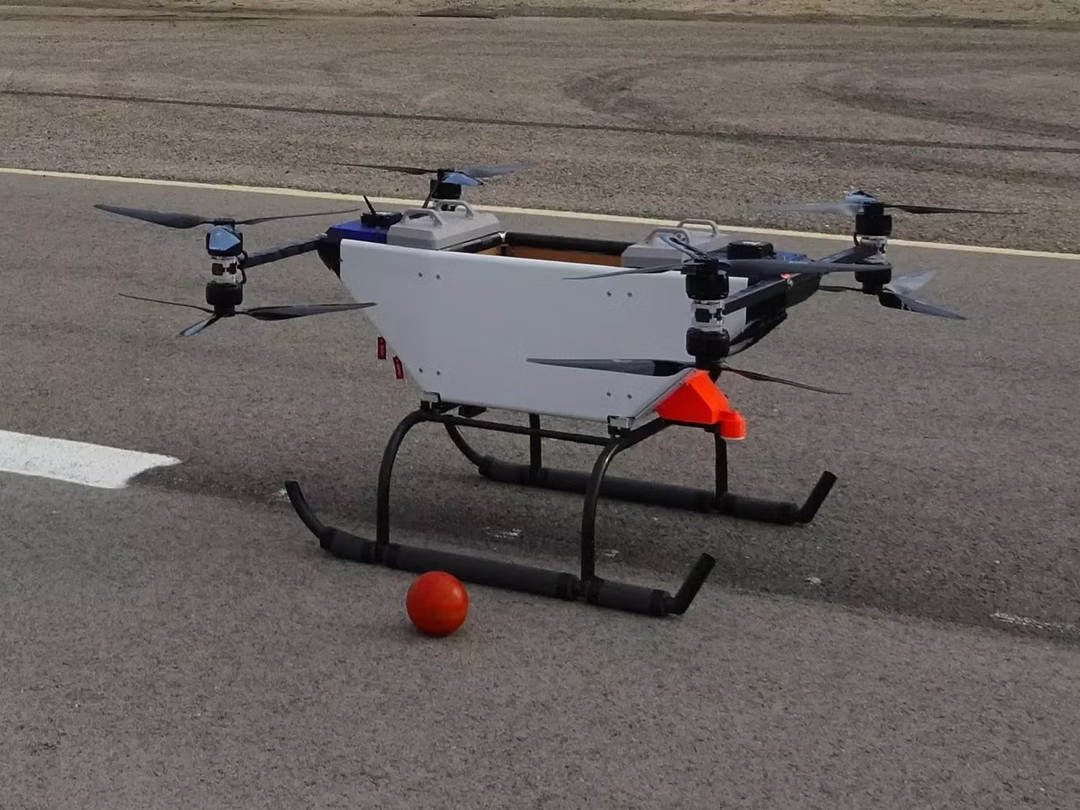
What makes the Cargo Copter notable is its design for rapid payload swaps and its potential for dual-use operations—cargo transport, ISR (intelligence, surveillance, and reconnaissance), and communications relays. The fuel‑powered drivetrain gives it a much longer range than pure electric competitors.
Who it’s for: Military logistics units and government agencies that need long‑range, heavy‑lift capability from unimproved sites, including naval operations. Still in development, but worth watching for 2027 and beyond.
EHang 216‑L
The EHang 216‑L is the cargo version of EHang’s well‑known autonomous passenger eVTOL. It carries up to 226 kg—among the heaviest payloads for a pure‑electric multirotor—over a range of about 120 km. Flight time is 21 minutes, which is typical for a drone moving this much weight.
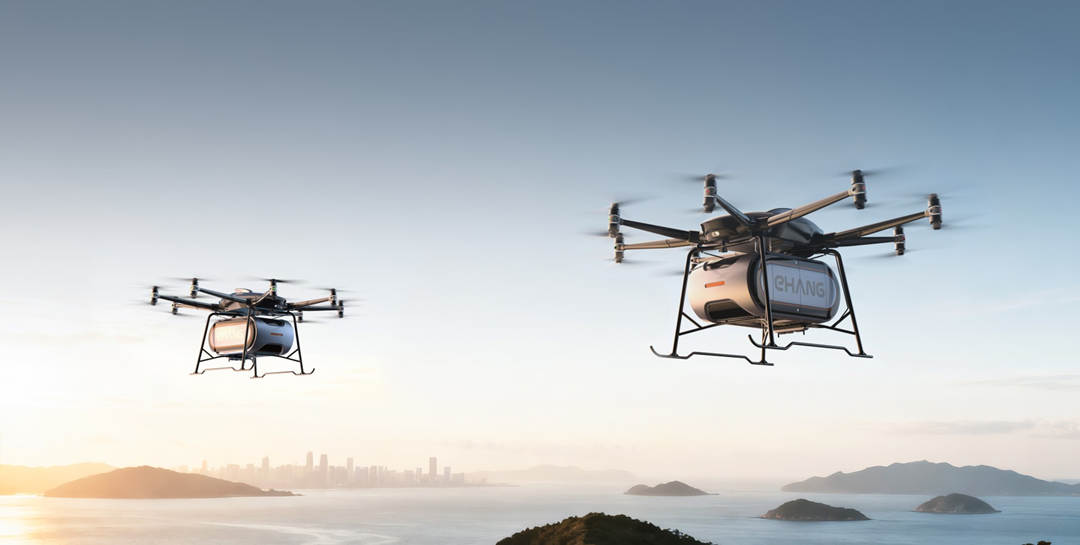
The 216‑L is designed for short‑ to medium‑haul logistics in both urban and rural settings. Like its passenger sibling, it uses fully autonomous flight—no pilot, no remote control. You load the cargo and plan the route on a tablet, and the drone flies itself. It is a straightforward, no-frills heavy lifter.
Who it’s for: Logistics operators who need to move heavy cargo (200 kg+) over distances up to 120 km without requiring a pilot. Works well for island resupply, remote construction, or emergency cargo drops in areas with limited infrastructure.
Volocopter VoloDrone
The Volocopter VoloDrone is a pure‑electric heavy‑lift eVTOL with a 200 kg payload capacity. It uses 18 rotors for redundancy and safety, with a 9.2‑meter diameter. Flight time is about 30 minutes, and the range is 40 km. Batteries are swappable in under five minutes, which helps reduce turnaround time.
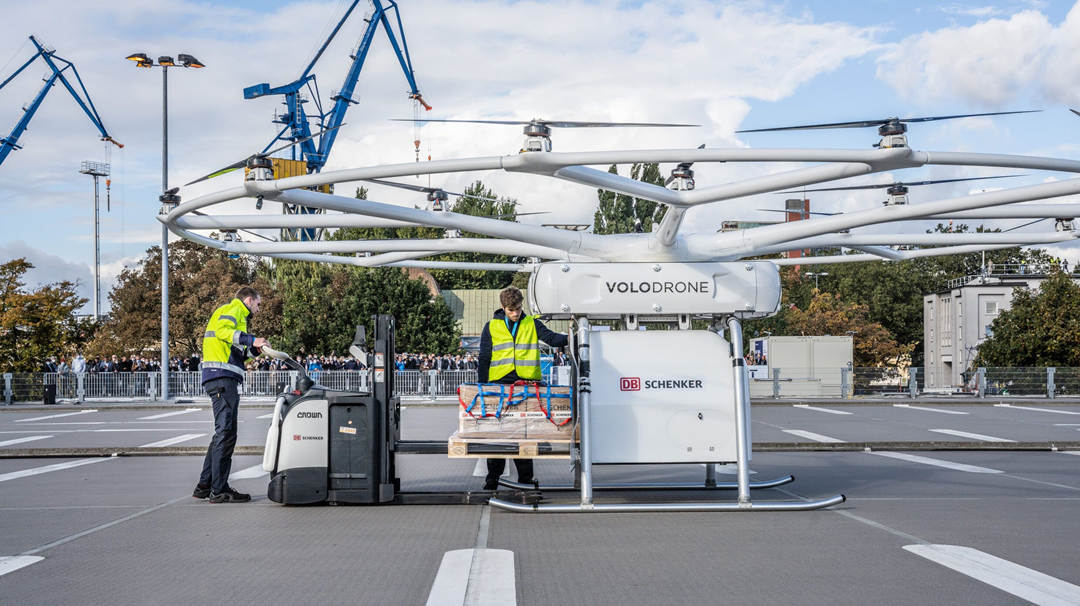
The VoloDrone is designed for a wide range of tasks: logistics, agriculture (spraying), construction (lifting supplies to high floors), and public services like disaster relief. It uses a standardized rail attachment system common in aerospace and logistics, making it compatible with various cargo containers.
Who it’s for: Urban logistics, port operations, and agricultural or construction sites that need heavy lifting within a short radius (up to 40 km). The quiet electric operation makes it suitable for noise‑sensitive urban environments.
FB3 Heavy‑Lift Drone
The FB3 from Italian manufacturer FlyingBasket is a pure‑electric heavy‑lifter that carries up to 100 kg while weighing only 70 kg empty—it lifts 40 percent more than its own mass, which is unusual in the industry. Range varies by payload: 25 km with 5 kg, down to 2.5 km with the full 100 kg. Flight time is about 30 minutes.
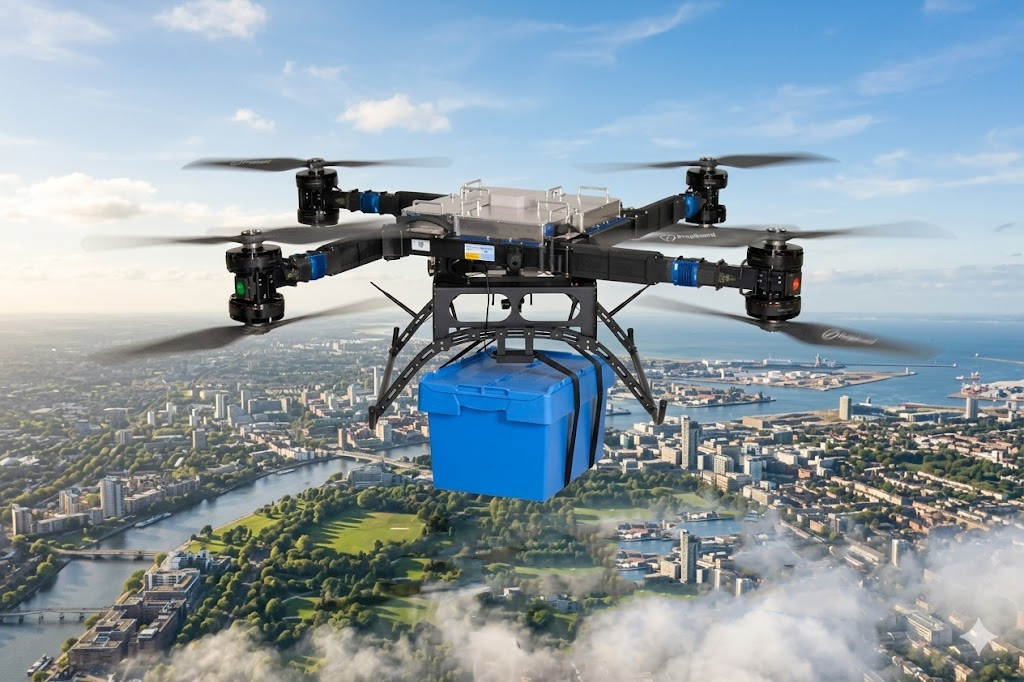
The FB3 has already completed over 3,000 flights and 1,000 real missions, including delivering equipment to wind turbines, lifting construction materials to rooftops, and transporting 6G communication devices for Huawei. It comes pre‑assembled and fits in a van or pickup truck for rapid deployment.
Who it’s for: Construction, energy (wind turbine maintenance), and logistics operators who need to lift heavy items over short distances. Ideal for vertical lifts where a crane cannot reach—rooftops, mountain sites, and offshore platforms.
DJI FlyCart 100
The DJI FlyCart 100 is DJI’s heavy‑duty answer to industrial logistics. It carries up to 100 kg in single‑battery mode (85 kg in dual‑battery mode for redundancy). The range is 12 km with a 65 kg load, and the flight time is about 12 minutes. The FC100 features a flagship winch system with an electric hook, allowing precise aerial drops without landing.
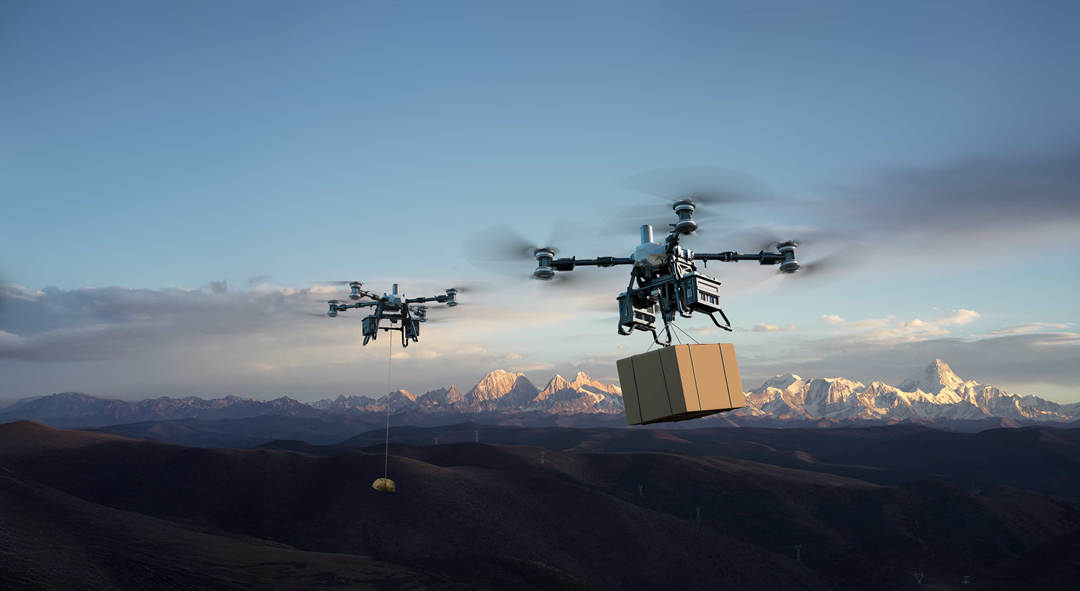
Upgrades over the smaller FlyCart 30 include millimeter‑wave radar (front, lower, and rear), LiDAR point cloud display, terrain follow, and a 9‑minute fast charge (30 % to 95 %). It also has an IP55 rating for weather resistance. The FlyCart 100 is less a delivery drone and more a complete aerial logistics platform.
Who it’s for: Industrial operations that need to move 80–100 kg over moderate distances (under 15 km) – construction sites, emergency response, powerline maintenance, and offshore logistics. The winch system is a key advantage for areas where landing is not possible.
Griff 60
The Griff 60 is a Norwegian heavy lifter built for extreme conditions. It carries up to 60 kg using eight motors, with a flight time of about 33 minutes. Griff Aviation’s drones are known for rugged reliability—the Griff 60 has been donated to the Ukrainian military for frontline resupply of ammunition, medical supplies, and rations.
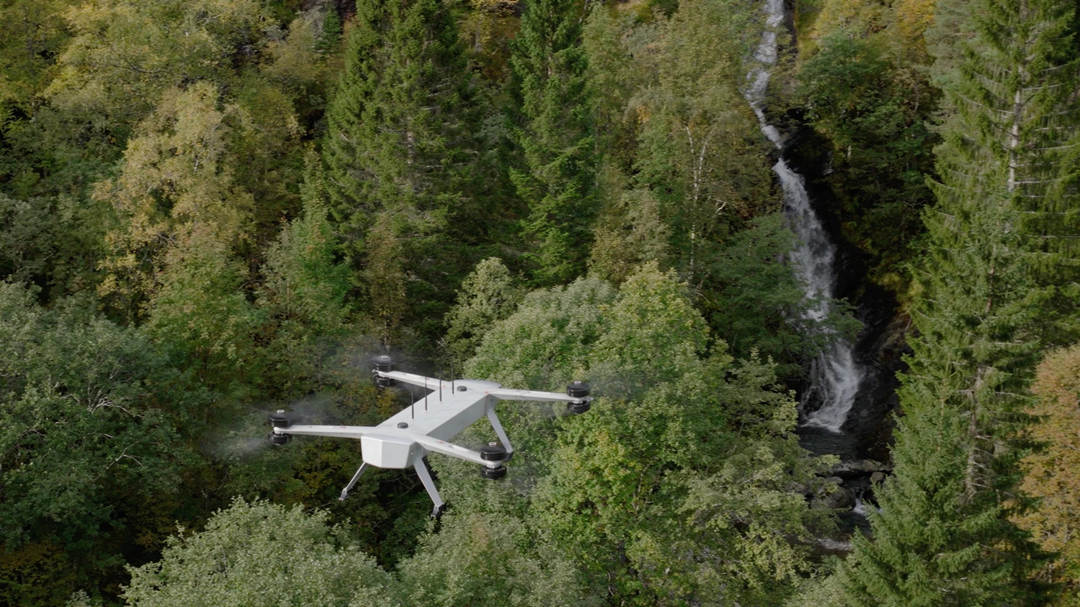
The company also offers the Griff Hybrid, which extends endurance and payload further using hybrid propulsion. All Griff drones are designed for demanding operational conditions, with a proven track record in military and industrial roles. Price for the Griff 60 is approximately USD 180,000.
Who it’s for: Military logistics, emergency services, and industrial operators who need a tough, reliable heavy‑lifter that performs in extreme weather and remote locations. The 33‑minute flight time is practical for tactical resupply missions.
DJI FlyCart 30
The DJI FlyCart 30 is DJI’s versatile medium‑lift cargo drone. It carries 40 kg in single‑battery mode (30 kg in dual‑battery mode) with a range of 16 km under a 30 kg load. Flight time is about 18 minutes. It supports both a cargo box (landing delivery) and winch mode for aerial drops.
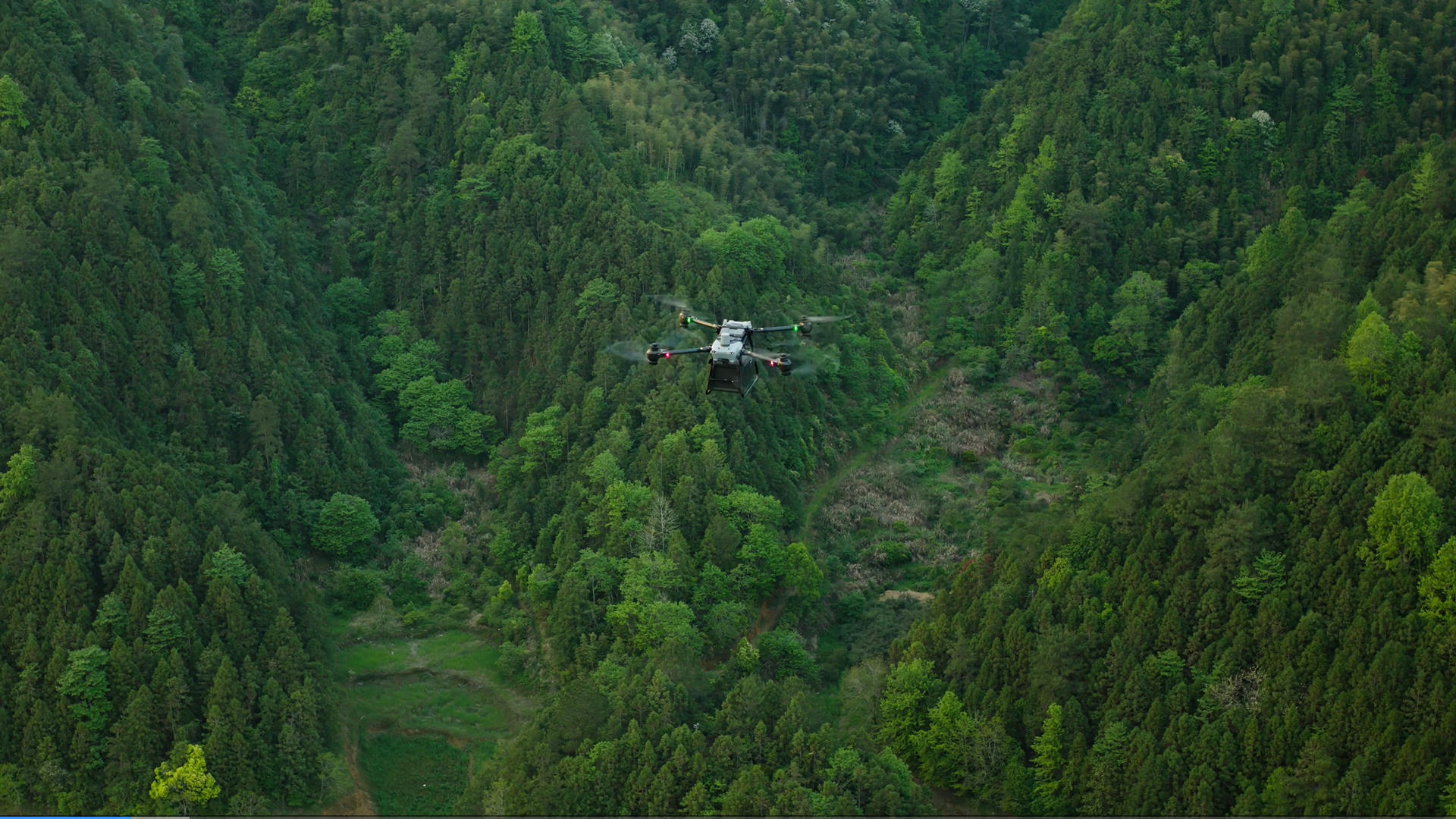
While less powerful than the FC100, the FC30 is more compact and remains an excellent choice for medium‑scale logistics. It includes millimeter‑wave radar (front and rear), dual‑vision obstacle avoidance, and AR assistance. The FlyCart 30 has been widely adopted for last-mile delivery, emergency supply drops, and industrial tool transport.
Who it’s for: Operators who need to move 30–40 kg over short to medium distances (up to 16 km) in a compact, proven package. Ideal for mountain rescue, medical supply delivery, and small construction sites where the larger FC100 would be overkill.
Draganfly Heavy Lift Drone
The Draganfly Heavy Lift drone is a North American-made industrial workhorse. It carries 30 kg (67 lbs) of payload with up to 55 minutes of flight time and a 30 km range. Designed and manufactured in North America, it has been refined over more than 20 years of industry experience.
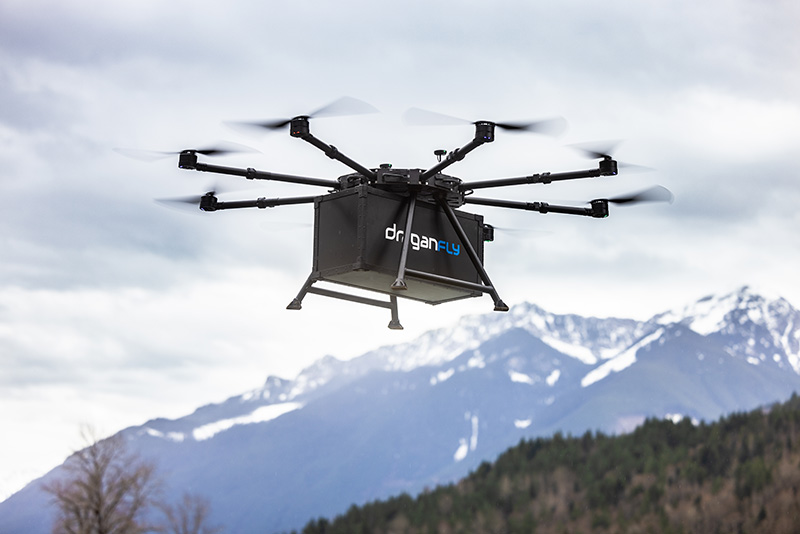
The drone is compatible with a wide range of interchangeable payloads, including a modular parcel delivery box (up to 15″ x 17″ x 34″), optical and thermal sensors, and LiDAR systems. It supports LTE‑enabled autonomous navigation and BVLOS operations. Draganfly markets it as the “Swiss Army Knife” of drones—capable of package delivery, winch‑down transport, surveying, public safety, and military deployment.
Who it’s for: Public safety agencies, agricultural operators, surveyors, and logistics providers who need a versatile, long‑endurance (55 min) heavy‑lifter made in North America. The 30 kg payload is well-suited for medical supplies, tools, or sensor packages, not industrial pallets.
JOUAV PH-20
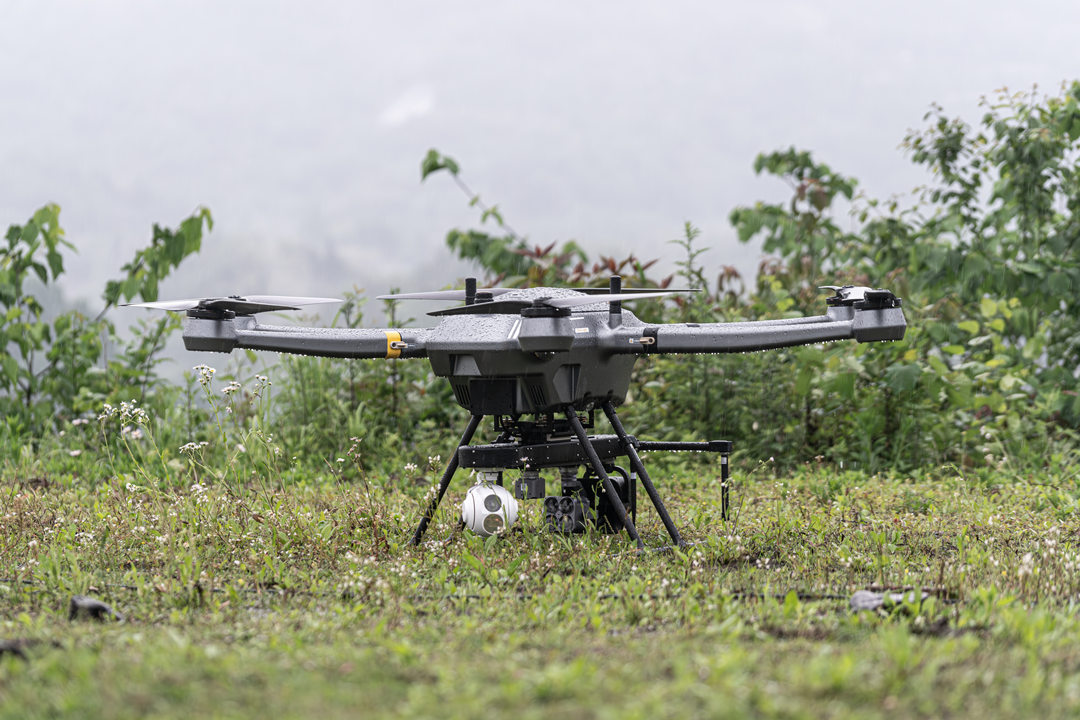
The JOUAV PH-20 is a pure-electric heavy-lift hexacopter built for missions that require precision, flexibility, and fast deployment. It carries up to 10 kg and can fly for up to 55 minutes at full load, making it well-suited for professional sensors and light cargo operations.
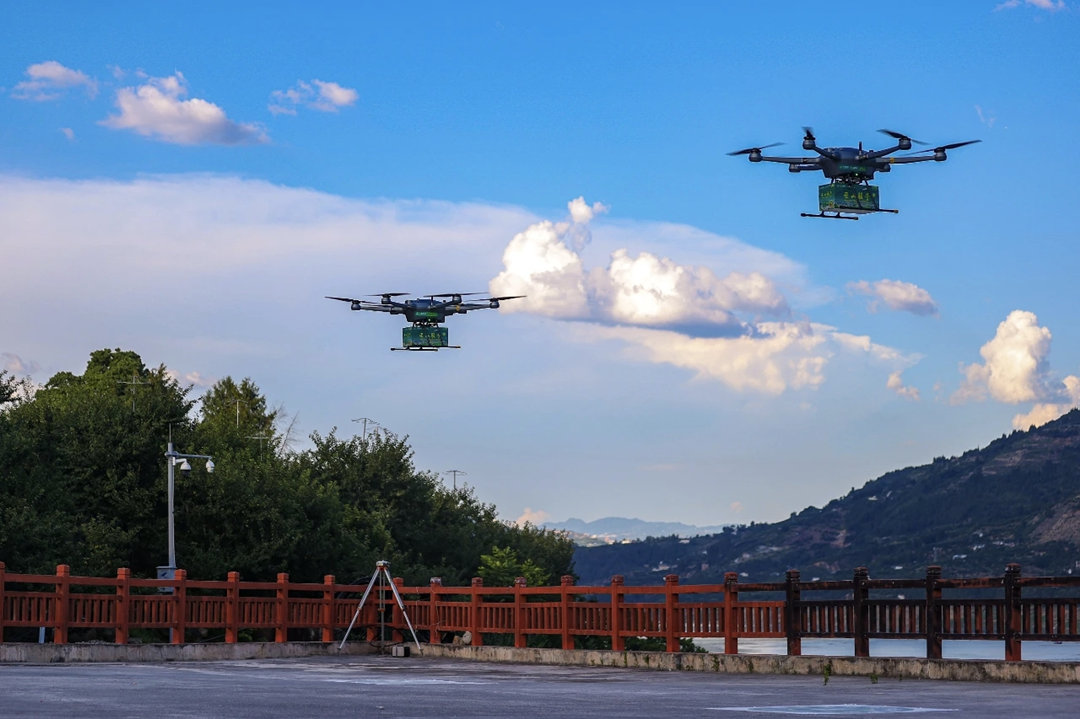
Its biggest advantage is versatility in harsh environments. The PH-20 features an IP55-rated carbon-fiber airframe, supports wind resistance up to 20.7 m/s, and operates in temperatures from –20°C to 55°C. The platform also includes RTK positioning, millimeter-wave radar, and terrain-following flight for accurate and safe low-altitude operations in complex environments.
Who it’s for: Surveying teams, public safety agencies, and infrastructure inspectors needing a rugged multirotor for mapping, powerline inspection, geohazard monitoring, urban surveillance, and light cargo delivery in difficult weather and terrain.
How to Choose the Right Cargo Drone?
There is a mistake that almost every first‑time cargo drone buyer makes.
They start with the wrong question.
Most people open a spreadsheet, sort by max payload in descending order, and then try to figure out why they need 500 kg of lifting capacity. Or they chase the longest range number on a brochure without realizing that range drops dramatically once you actually load the drone with cargo.
The truth is simpler. Before you look at any spec sheet, answer three questions:
- What are you moving? Weight, size, and urgency determine almost everything else.
- Where are you flying? Mountains, cities, islands, and battlefields have completely different requirements.
- What is the real budget? Not just the purchase price, but what it actually costs to keep the drone flying every week.
Once you have those answers, the rest of the selection process becomes a series of trade‑offs. Below is a seven‑step framework that walks you through exactly what to evaluate and where most buyers get it wrong.
1. Match payload and range to your real mission—not brochure numbers
Manufacturers quote payload and range under ideal conditions. Light wind. Low altitude. Fresh batteries. No cargo weight trade‑off. In the real world, those numbers look different.
The most important thing to understand is the payload‑range trade‑off. A drone that can carry 40 kg for 28 km might only carry 30 kg to that same distance—or reach only 16 km with the full 40 kg. This relationship is rarely linear. The DJI FlyCart 30, for example, advertises 16 km with a 30 kg load but only 8 km when fully loaded to 40 kg. Similarly, the Dronamics Black Swan offers roughly three times the range of some competing medium‑weight cargo drones, but that trade‑off is always there.
The cargo drone market is broadly segmented by payload, and each segment has a different maturity level:
- Light drones (1–25 kg): Last‑mile delivery and urgent medical shipments. Range: 10–100 km. This is the most commercially mature segment, with Zipline, Wing, and Amazon operating at scale.
- Medium drones (25–500 kg): Regional freight, remote area resupply, and intercity deliveries. Range: 300–2,500 km. This segment is where most new investment is concentrated in 2026.
- Heavy drones (500 kg+): Competing with conventional air freight on medium-haul routes. Most are still in development or prototype stages.
- How to avoid the trap: Ask every manufacturer for a payload‑range curve, not just a single best‑case number. Then compare those curves with your actual mission profile. If your typical route requires carrying 35 kg for 20 km, a drone that handles 40 kg for 28 km might be fine. But a drone that carries 80 kg for 12 km will not help you, even though its payload number looks impressive.
2. Choose your airframe: multirotor, fixed‑wing, or VTOL
Airframe choice is not about which type is "better"—it is about which one fits your landing zone.
- Multirotor cargo drones take off and land vertically, hover precisely, and operate in tight spaces. They are ideal for short‑range deliveries (typically under 50 km) where you need to drop cargo onto a small landing pad, a rooftop, or even a ship deck. The trade-off is efficiency: multirotors burn a lot of energy just staying in the air, so flight times are short—often under 30 minutes with a heavy load.
- Fixed‑wing cargo drones are efficient over long distances. They can fly for hours and cover hundreds of kilometers on a single tank of fuel or charge. But they need a runway, a catapult, or a net to launch and recover them. They cannot hover. If you are delivering to a mountain village with no airstrip, a fixed-wing drone might get you there—but it will have nowhere to land.
- VTOL (Vertical Takeoff and Landing) cargo drones combine the best of both. They lift off vertically like a multirotor, then transition to efficient fixed‑wing cruise flight. This makes them the fastest‑growing segment in the market for a reason: no runway needed, but still long range. The JOUAV CW‑80E and Elroy Air Chaparral are all examples of this hybrid approach.
How to avoid the trap: Be honest about your landing environment. If you have a prepared runway at both ends, fixed‑wing is fine. If you are landing on dirt, grass, a ship, or an urban rooftop, you need a VTOL or multirotor—no exceptions.

3. Understand power systems: battery, hybrid, or fuel
The power system determines how long your drone stays in the air, how quickly you can turn it around for the next mission, and what kind of infrastructure you need at your operating bases.
- Pure electric (battery‑powered): Quiet, zero emissions, simple to maintain. But flight endurance is limited – often 20 to 60 minutes under load – and batteries degrade over time. A real‑world case study of a coastal cargo route in China found that battery cycle life was about 500 charges, with each flight costing roughly $90 in battery wear alone. Pure electric works well for short, predictable routes where you have charging infrastructure at both ends.
- Hybrid‑electric (gas generator + battery): A small gasoline engine charges the battery in flight, dramatically extending endurance. The JOUAV CW‑80E, for instance, can stay airborne for 600 minutes on hybrid power. Hybrid drones refuel in minutes rather than waiting for batteries to charge, which means higher daily mission throughput. The trade‑off is more mechanical complexity, higher maintenance costs, and noise.
- Fuel‑powered (gasoline only): Rare in smaller cargo drones but common in the ultra‑heavy fixed‑wing segment (W5000, Natilus, Dronamics Black Swan). These burn conventional aviation fuel, have extremely long range, and can carry many tons of payload. They are essentially unmanned cargo aircraft, not drones in the traditional sense.
- Hydrogen fuel cell: Still emerging. Offers the potential for even longer endurance than a hybrid with zero emissions, but hydrogen infrastructure is limited, and system costs remain high.
How to avoid the trap: Do not automatically default to pure electric because it sounds "greener." If your route is longer than 50 km or you are operating from locations without reliable grid power, hybrids or fuel may be the only practical options. The right power system is the one that keeps your drone flying—not the one with the best marketing language.
4. Safety and redundancy: what happens when something breaks?
This is the question that separates industrial cargo drones from consumer toys. A cargo drone flying over populated areas, carrying valuable freight, or operating BVLOS must be designed to survive component failures.
In practical terms, look for:
- Redundant flight controllers: If one fails, another takes over immediately.
- Dual batteries or redundant power distribution: Losing one battery should not cause a crash.
- Multiple GPS and navigation systems: So, losing a single satellite signal does not disorient the aircraft.
- Obstacle detection and avoidance: Radar, LiDAR, or visual sensors that can detect and route around obstacles automatically.
- Emergency parachute systems: Particularly for heavier drones or those flying over populated areas.
- Fail‑safe return‑to‑home logic: If the communication link is lost, the drone should return to its launch point autonomously.
A practical reality check: Not every cargo drone needs every redundancy feature. A small, light‑duty drone delivering pizza in a suburban neighborhood is not the same as a 500 kg drone flying over a city. But as payload weight increases and as you move toward BVLOS operations, redundancy is not optional—it is a regulatory requirement. The FAA’s proposed Part 108 rule makes clear that detect‑and‑avoid capabilities and system redundancy will be baseline expectations for scaled BVLOS operations.
How to avoid the trap: Ask the manufacturer for a failure mode analysis. What happens if the left motor fails at 200 meters? What if the GPS signal drops out over a forest? What if the datalink goes silent? If the answer is vague or requires the pilot to take manual control immediately, that drone is not ready for serious cargo work.
5. Regulatory compliance: can you legally fly it?
This is where many buyers make expensive mistakes. They purchase a cargo drone, get it delivered, and then discover they cannot fly it anywhere because it does not meet local aviation regulations.
Regulatory frameworks vary by region, but a few patterns are consistent:
- United States (FAA): Commercial drone operations require a Part 107 certificate. BVLOS flights currently require waivers, but a new proposed rule (Part 108) aims to create a standardized framework for BVLOS cargo delivery. Part 135 certification is required for larger‑scale delivery operations.
- Europe (EASA): Operations are regulated under EU Regulations 2019/947 and 2019/945. The “Specific” category applies to most cargo drone operations and requires risk assessment and operational authorization. U‑space systems are being rolled out to enable safe BVLOS operations.
- China (CAAC): Airworthiness certification for cargo drones became mandatory starting July 2026. The Civil Aviation Administration of China has been actively certifying large cargo drones; AutoFlight’s CarryAll, for example, has received type, production, and airworthiness certificates, making it one of the earliest large cargo eVTOL platforms to reach that regulatory stage.
The most common trap: Buyers assume that because a drone is sold commercially, it is automatically legal to operate anywhere. This is false. You – the operator – are responsible for compliance. Many drones sold online are not certified for commercial BVLOS operations and cannot be made compliant without extensive modifications (if at all).
How to avoid the trap: Before you sign a purchase agreement, confirm that the drone manufacturer can provide documentation of regulatory compliance in your operating region. For larger drones or BVLOS missions, look for platforms that have already navigated the certification process—it saves years of regulatory headaches.
6. Total cost of ownership (TCO): the number nobody wants to talk about
The purchase price of a cargo drone is usually the smallest number on the final bill.
A 2025 Gartner report found that 68% of fleet operators underestimate the total cost of ownership, mistaking the upfront price for long-term value. The real costs show up in places buyers rarely think about:
- Battery replacement: A case study of a real cargo drone route found that battery cycle life was about 500 charges. Each flight carried roughly $90 in battery wear costs, and batteries needed replacement approximately every 18 months.
- Labor: The same route employed a pilot and a maintenance engineer, with combined annual salaries of approximately $40,000—representing a significant portion of ongoing operational costs.
- Maintenance and spare parts: Hybrid and fuel‑powered drones have more moving parts and higher maintenance requirements than pure electric platforms.
- Software subscriptions and data links: Many industrial drones require ongoing subscriptions for mission planning, fleet management, and real‑time telemetry.
- Training and certification: Operators and maintenance staff need formal training, which adds both upfront and recurring costs.
- Insurance: Cargo drone insurance is not cheap – and premiums increase with payload weight and operational risk.
A real‑world benchmark: The coastal cargo route mentioned above required an upfront investment of approximately 200,000 (drone, batteries, launch infrastructure, and comms gear), with annual operating costs around 110,000. The break-even point was about 420 flights per year—roughly 1.2 flights per day. At 600 flights annually, the operation was marginally profitable.
How to avoid the trap: Build a five‑year TCO model before you buy. Include the purchase price, batteries (and replacements), maintenance (labor + parts), software, training, insurance, and landing infrastructure. Then compare that total to the revenue or cost savings you expect from the operation. If the numbers do not work, a cheaper drone will not fix them—it will just hide the problem longer.
7. Operating environment: weather, altitude, and infrastructure
A cargo drone that works perfectly in a mild climate may struggle in real‑world conditions.
Key environmental factors to evaluate:
- Wind tolerance: Industrial cargo drones should have published maximum wind speeds for safe operation. Offshore operations or mountain routes may require higher tolerances than urban deliveries.
- Temperature range: Batteries lose efficiency in extreme cold. Electronics can overheat in desert conditions. Check the drone’s specified operating temperature range and confirm it matches your environment.
- Altitude performance: High‑altitude operations (above 2,500 meters) reduce lift and battery efficiency. Some drones are certified for high‑altitude flights—the JOUAV CW‑80E has a 6,000‑meter ceiling—while others are not.
- Water and dust resistance (IP rating): An IP54 rating provides protection against dust and splashing water; IP67 allows submersion. Offshore operations or tropical environments require higher IP ratings.
- Ground infrastructure: Pure electric drones require charging stations at both ends of the route. Hybrid and fuel drones require fuel storage and handling. VTOL drones need a clear landing zone but not a full runway. Understand what you need to build before you fly.
How to avoid the trap: Test the drone in your actual operating environment if possible. If that is not feasible, demand data from the manufacturer showing performance under similar conditions. A drone that has never flown at 4,000 meters is not suddenly going to work at that altitude just because the brochure says it might.
8. Manufacturer reputation and support
This final factor is easy to overlook—until something goes wrong and you need help.
What to look for:
- Proven track record: How many flights has the manufacturer logged? How many aircraft are in active service?
- Customer support and documentation: Is there a detailed manual? A parts catalog. A responsive support team?
- Software updates: Cargo drones are complex software systems. Regular updates for navigation databases, flight logic, and safety features matter.
- Training programs: Does the manufacturer offer operator and maintenance training?
- Warranty and service agreements: What is covered? For how long? What does an extended service contract cost?
Real‑world advice: Avoid generic or unbranded drones unless you are working with an expert consultant who can verify quality and compliance. A slightly higher initial investment from a reputable manufacturer almost always results in lower long‑term costs and fewer operational disruptions.
The bottom line: start with the mission, not the spec sheet
The best cargo drone in the world is the one that does your job reliably, legally, and affordably.
Do not start with "what is the largest payload?" or "what is the longest range?" Start with your actual route, your actual cargo, and your actual budget. Then work backwards through these seven questions. The right drone will reveal itself – and you will avoid the expensive mistakes that come from chasing brochure numbers instead of real capability.
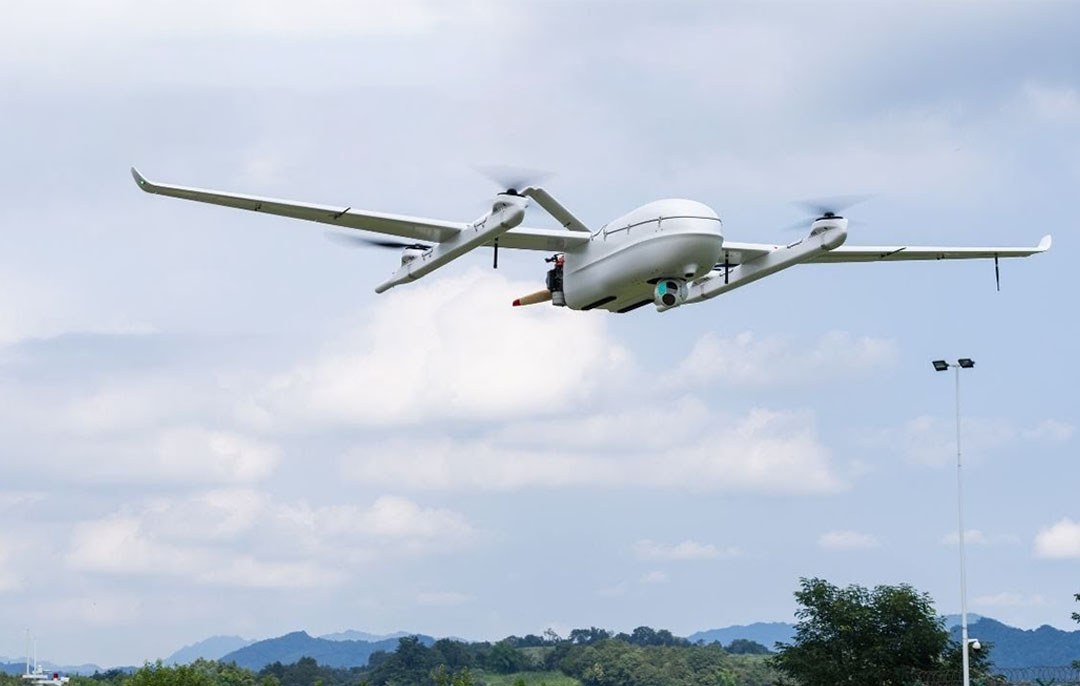
Heavy/large VTOL cargo drones are where prices jump significantly. The Pipistrel Nuuva V300 is expected to be in the low- to mid-seven-figure range, with production-scale costs likely falling as manufacturing ramps up.
Ultra‑heavy fixed‑wing cargo drones are a different world entirely. The Dronamics Black Swan is perhaps the most commercially mature example. The company claims its drone can cut air freight costs by up to 80% compared to traditional cargo aircraft on certain routes, largely by removing the pilot, crew support systems, and the associated operational overhead. Early production costs per unit were estimated at around €1 million for prototypes, with a target to drive that lower as volume scales.
The Hidden Costs: What Your Budget Needs to Include
Here is where most buyers get surprised.
The purchase price is only the beginning. A real‑world drone logistics operation incurs significant ongoing expenses that you must model before signing anything.
Batteries are a subscription, not a one‑time purchase. Lithium‑ion batteries typically lose about 20% of their capacity after 300 charge cycles. A medium‑heavy industrial drone making regular delivery runs might cycle its batteries every day. If a battery set costs 6,000 to replace and you need new sets every 18 months, that is 4,000 per year in battery wear alone—on top of the initial purchase. One case study of a coastal cargo route found that each flight carried approximately $90 in battery depreciation costs.
Labor is often the largest line item. The same coastal route employed a pilot and a maintenance engineer, whose combined salaries totalled about $41,000 per year. Those two roles accounted for roughly half of the total operating budget. As the industry scales and one operator can manage multiple drones, this cost per flight will come down, but for now, you need to plan for skilled people at both ends.
Maintenance adds up quickly. A major logistics operator reported that its primary cargo drone model had a 90% depreciation over three years, with battery replacements costing $8,200 every 18 months. Routine maintenance, spare parts, and unscheduled repairs can add another 10–20% on top of annual operating costs. Some operators have successfully reduced maintenance expenses by adopting predictive health monitoring and modular design—but those systems themselves require investment.
Insurance is not optional. Cargo drone insurance premiums depend on payload weight, flight distance, operational environment (urban vs. remote), and the drone‘s safety certifications. For a medium industrial drone operating BVLOS over moderately populated areas, annual insurance can easily run into the tens of thousands of dollars.
Software, data links, and airspace access. Most industrial cargo drones require subscription‑based mission planning software, fleet management platforms, and sometimes paid access to airspace deconfliction services. These recurring costs are often buried in the fine print but can add 5,000 to 20,000 annually, depending on fleet size.
Read More
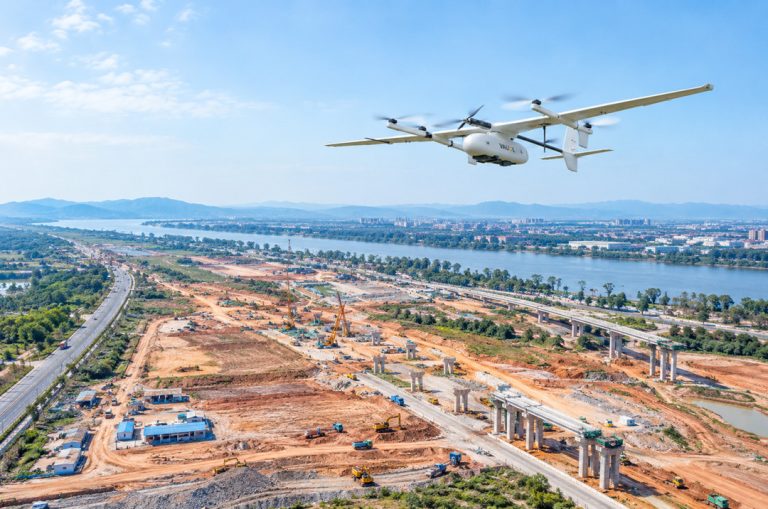
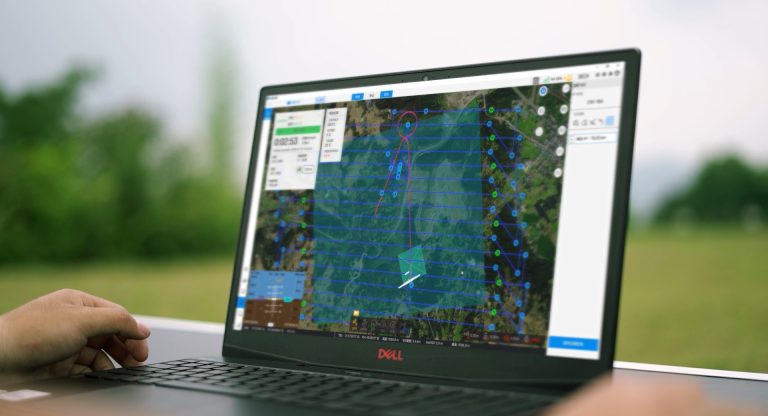
Picking drone mapping software feels harder than it should be.
Open any review site, and you will see the same ten names repeated: Pix4D, DroneDeploy, DJI Terra, Agisoft Metashape, UgCS. But the recom
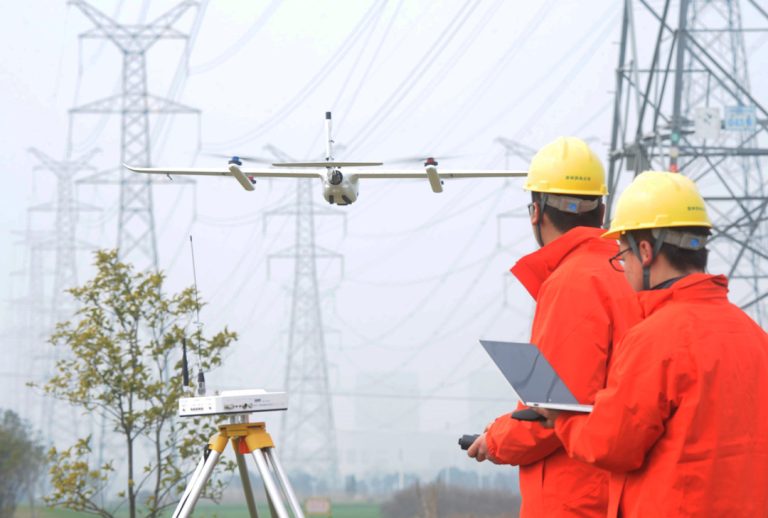
Here’s the question every drone pilot hears: How much should I charge?
And here’s the honest answer: $100 to $500 an hour, or $300 to $5,000 per project, depending on what you’re doi

JOUAV Product News and Use Cases
Fixed-Wing VTOL Drones Insights and Industry Trends
Invitations to online demo events
 English
 中文
中文