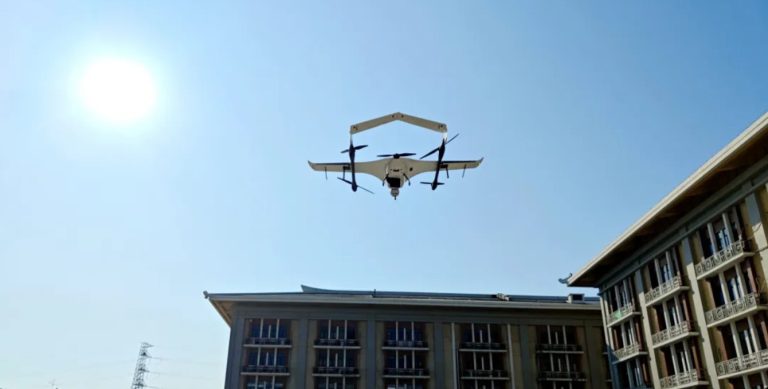
JOUAV drone-in-a-box systems are helping Yuecheng District, Shaoxing, improve road inspection and urban management through aerial mapping and AI-assisted analysis. Combining JOS-C700 VTOL and JOS-P200 multirotor hangar systems, the project covers 311.7 km² of digital mapping, 121.33 km of road imagery collection, and more than 26 km of mountain roads. Applications include tunnel safety monitoring, mountain-road patrols, and AI-powered urban inspection.
TIANJIN, China, June 12, 2026 – JOUAV participated in the 2026 China Oil & Gas Pipeline Unmanned Technology Exchange Conference, held in Tianjin from June 11–12, where the company showcased its autonomous pipeline inspection solutions designed to support safer and more efficient oil and gas infrastructure operations.
The conference is one of China's leading professional platforms dedicated to unmanned technologies in the oil and gas industry. Jointly supported by major energy organizations, including PetroChina, Sinopec, CNOOC, State Grid, and Yanchang Petroleum, the event brings together industry experts, operators, researchers, and technology providers to discuss the latest developments in digital transformation, intelligent operations, and industrial safety.
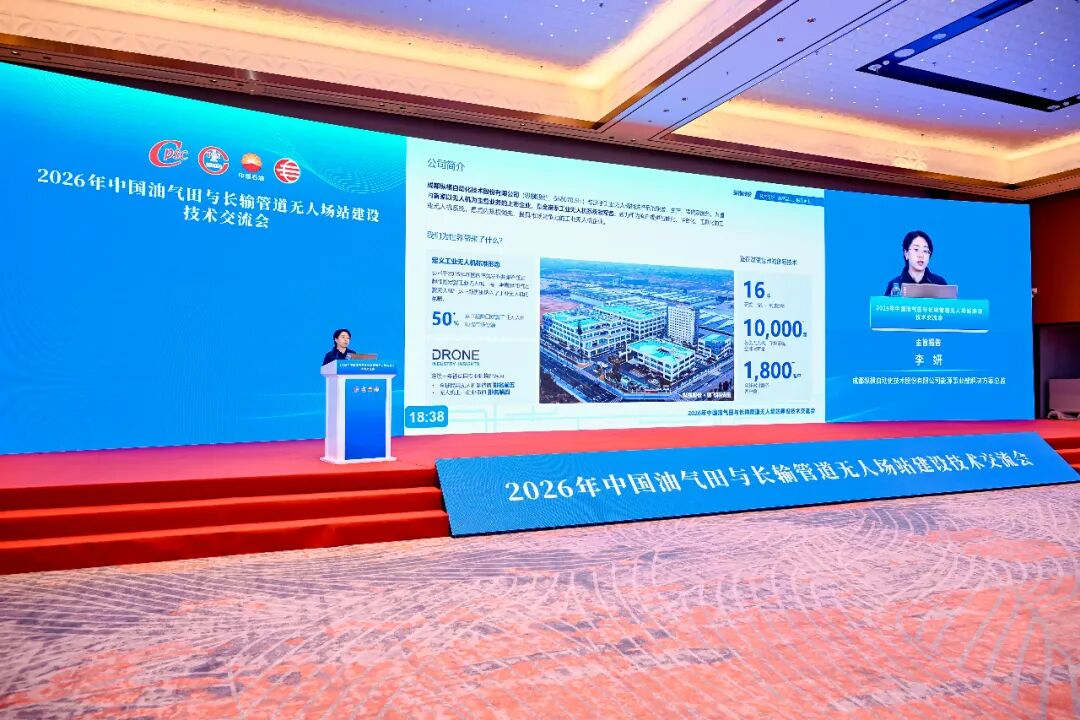
This year's discussions focused on how emerging technologies can help operators move beyond conventional inspection methods and accelerate the transition from reduced-manpower operations to fully autonomous workflows. Particular attention was given to the challenges of deploying unmanned systems across vast pipeline networks, complex terrain, and harsh operating environments.
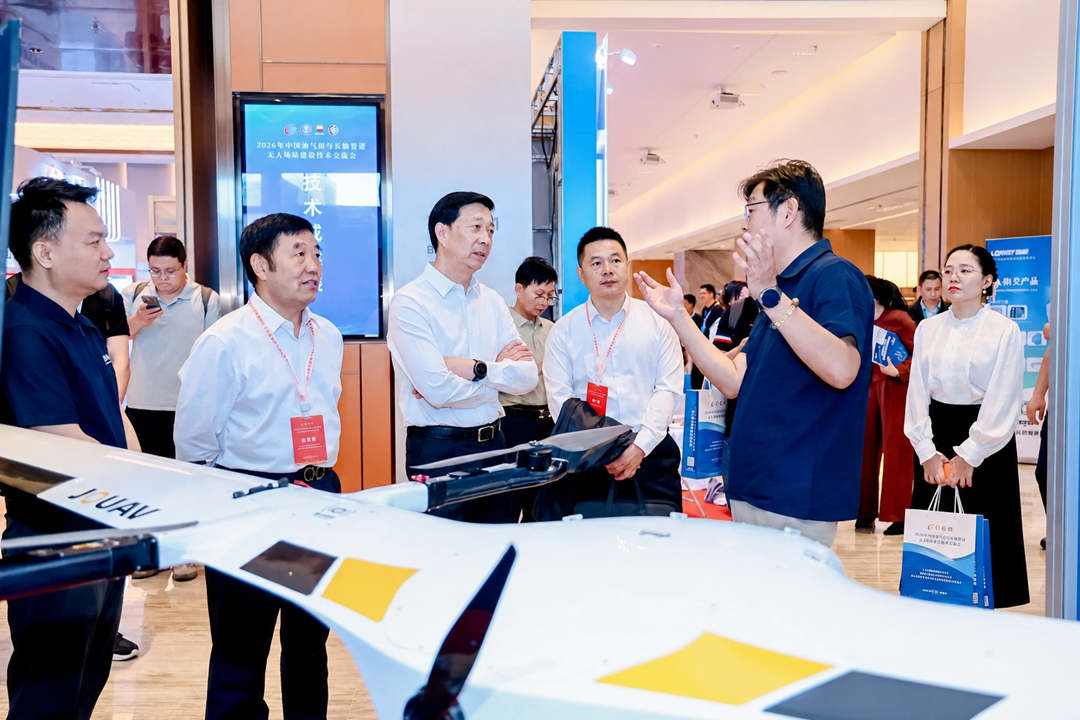
Against this backdrop, JOUAV presented a portfolio of autonomous inspection solutions tailored to the needs of pipeline operators.
Addressing Three Key Pipeline Inspection Scenarios
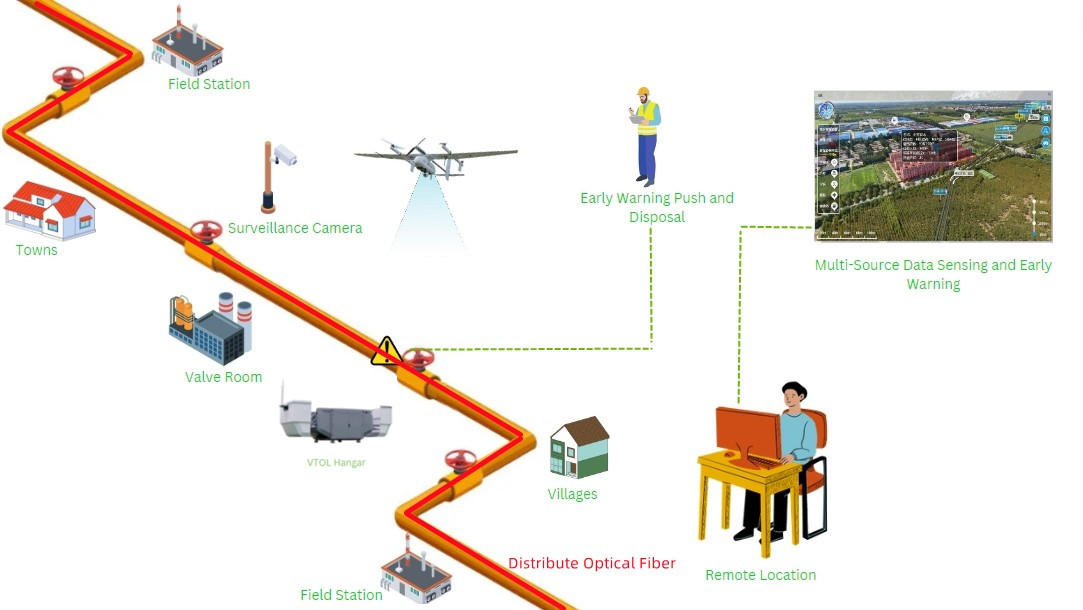
JOUAV's unattended operation solution is designed around three common pipeline management scenarios: routine pipeline patrols, critical pipeline section inspections, and natural gas leak detection. By combining UAV platforms, drone docking stations, intelligent software, and digital management tools, the solution provides continuous monitoring and data-driven decision-making across the entire inspection process.
Routine Pipeline Patrols
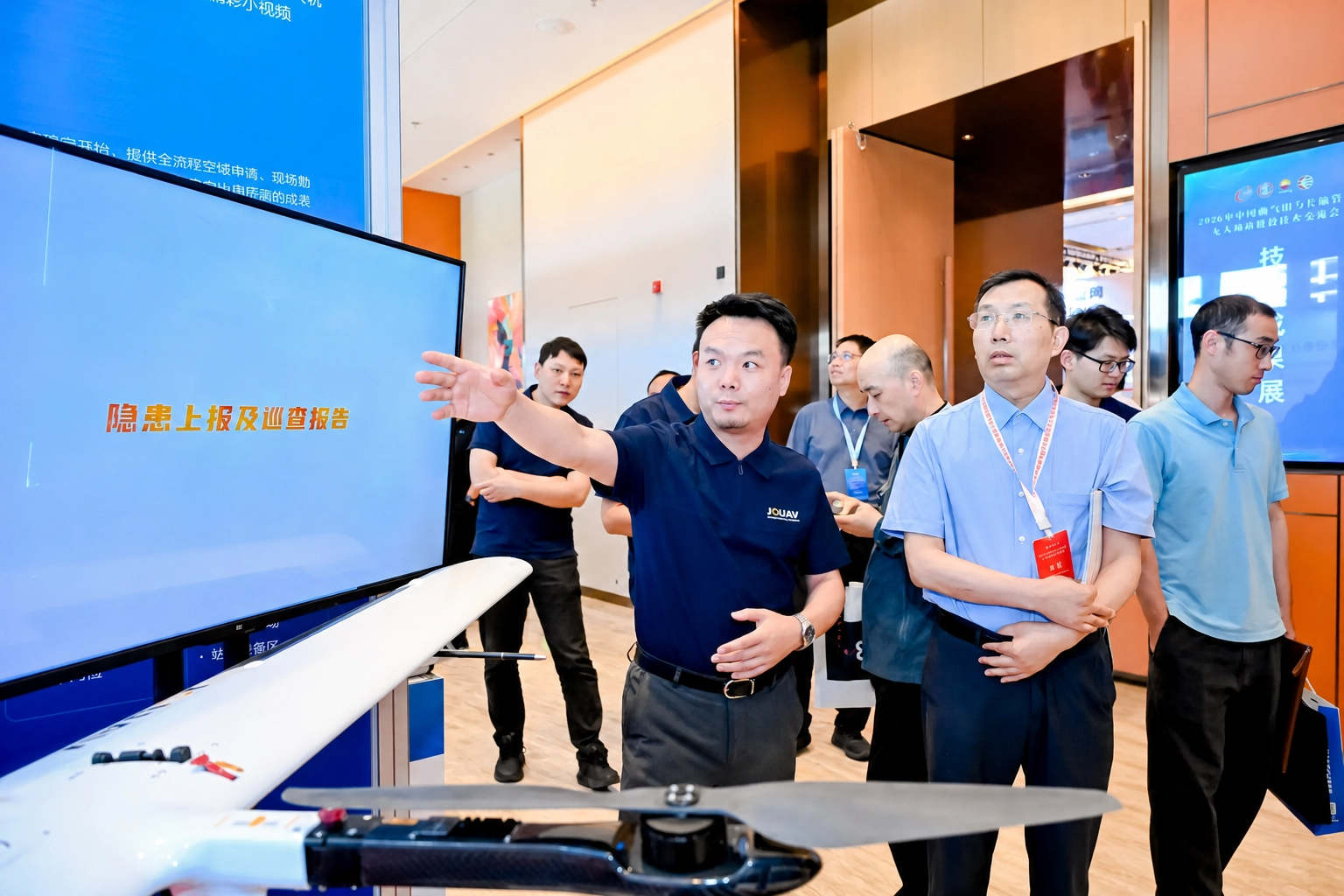
For daily pipeline monitoring, JOUAV deploys the JOS-C700 fixed-wing VTOL autonomous drone system integrated with a mapping camera, a gimbal camera, and a smart management platform.
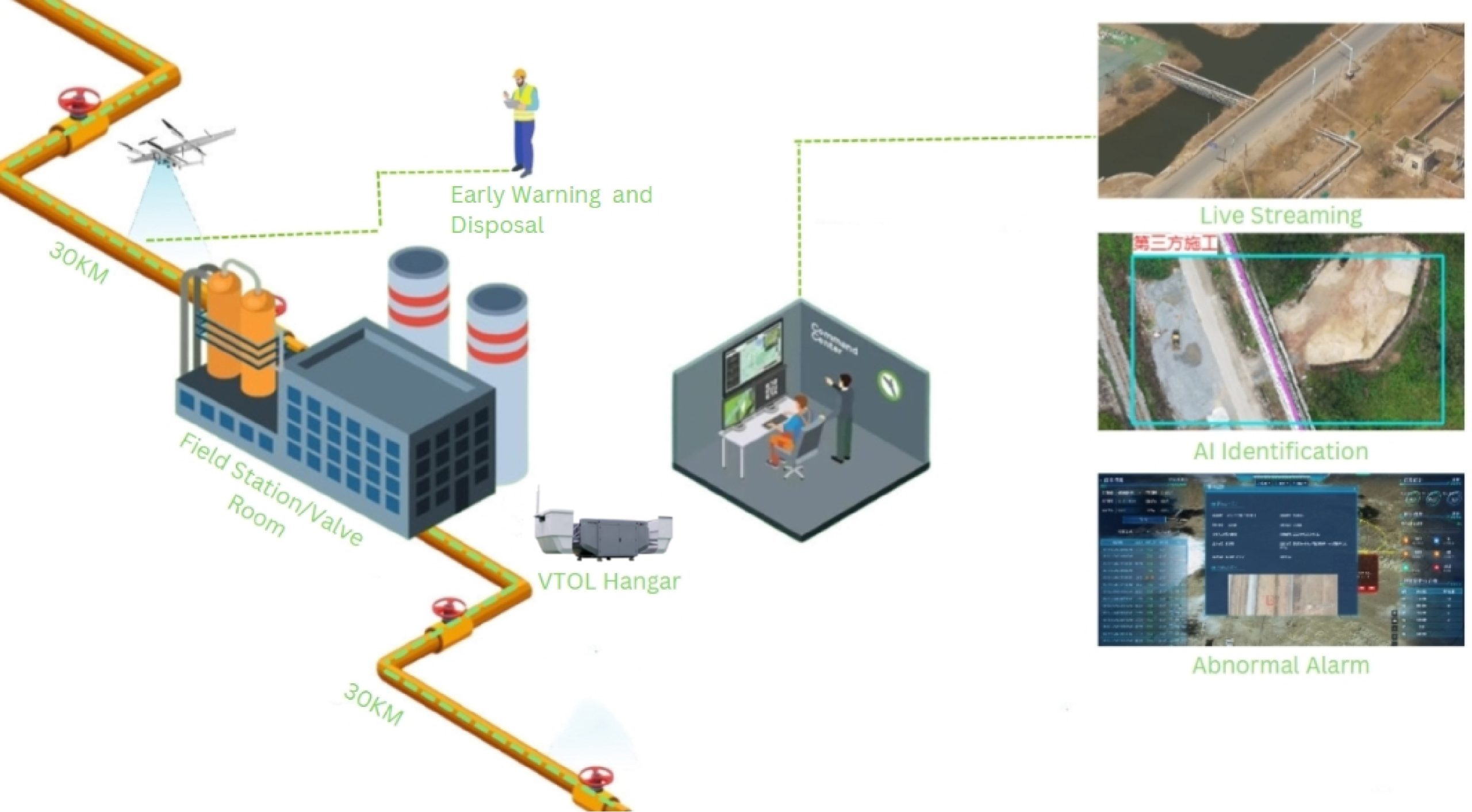
Based on preconfigured flight schedules, the drone dock automatically launches inspection missions without requiring personnel on site. The UAV follows designated routes along the pipeline corridor, collecting imagery and video data while onboard edge AI algorithms perform real-time analysis during flight.
When anomalies are detected, the system automatically generates alerts and sends notifications to maintenance teams for further review. The platform also supports historical image comparison, helping operators identify environmental changes, construction activities, vegetation encroachment, and other potential risks along the pipeline right-of-way.
Inspections in High Consequence Areas (HCAs)
Certain pipeline segments located in High Consequence Areas (HCAs) require enhanced monitoring due to their potential impact on public safety, the environment, or critical infrastructure.
To address these requirements, JOUAV combines its long-range UAV systems with data from existing monitoring networks to create a comprehensive pipeline safety monitoring framework. The UAVs conduct scheduled inspections in areas beyond the coverage of fixed surveillance equipment and provide rapid aerial verification of alerts generated by other monitoring systems.
By integrating data from multiple sources, operators can gain greater situational awareness, improve the accuracy of risk assessments, and significantly reduce unnecessary field deployments and operational costs.
Natural Gas Leak Detection
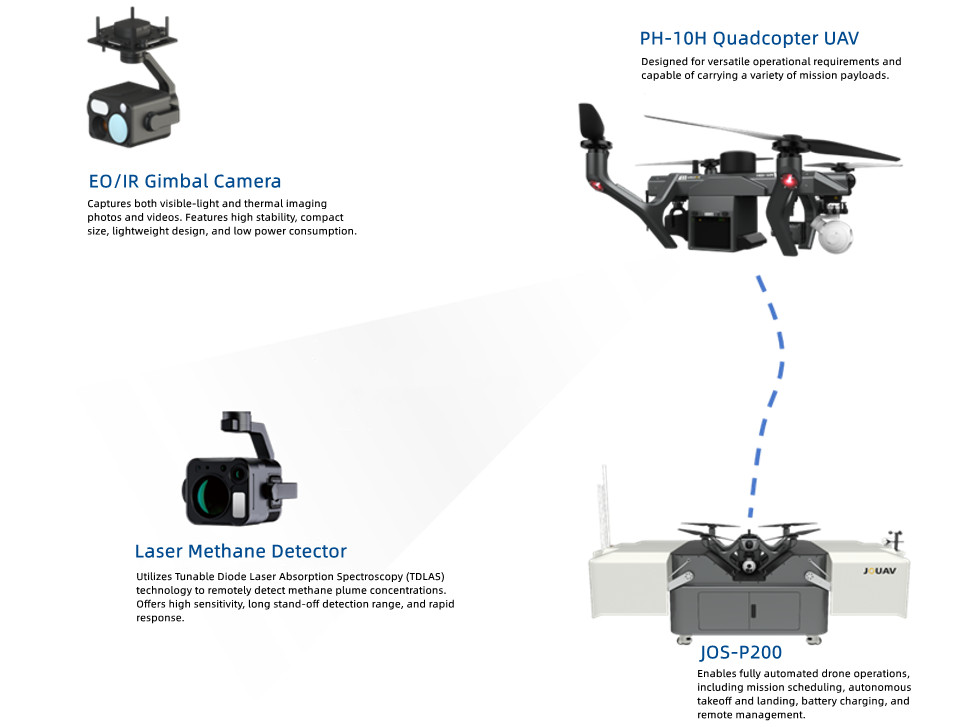
For methane monitoring applications, JOUAV demonstrated its JOS-P200 autonomous multirotor drone system equipped with a laser methane detector capable of remotely measuring methane concentrations from distances of up to 300 meters.
During inspections, the UAV flies above suspected pipeline sections while continuously collecting methane concentration data. Any abnormal readings are immediately visualized on the management platform, allowing operators to quickly identify potential leak locations. Warning notifications are simultaneously pushed to maintenance personnel, enabling faster response and improving operational safety.
Supporting the Shift Toward Autonomous Operations
As pipeline networks continue to expand and operational requirements become more demanding, energy companies are increasingly looking for technologies that can improve inspection efficiency while maintaining high safety standards.
By integrating autonomous flight operations, intelligent data processing, and specialized sensing technologies, JOUAV's solutions help operators reduce manual workloads, improve inspection consistency, and gain faster access to actionable information.
The company's participation in the conference reflects its ongoing commitment to supporting the digital transformation of oil and gas infrastructure and advancing the adoption of autonomous technologies across critical energy assets.
More Use Cases
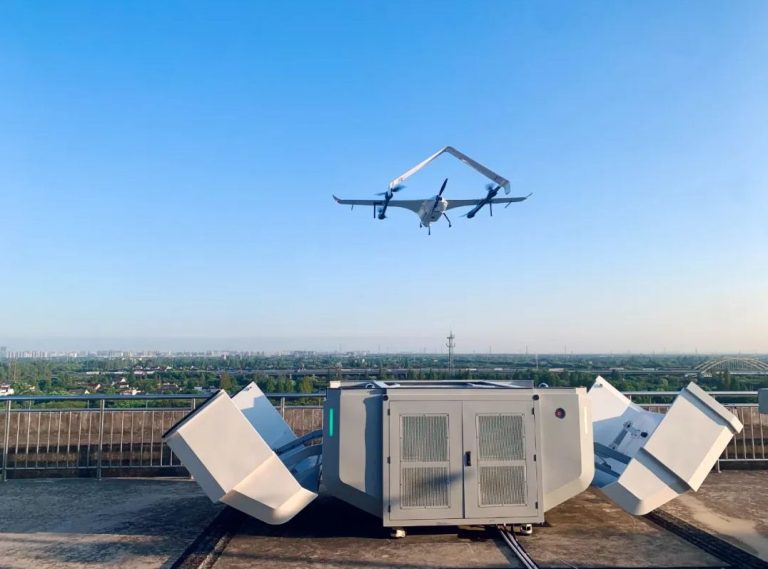
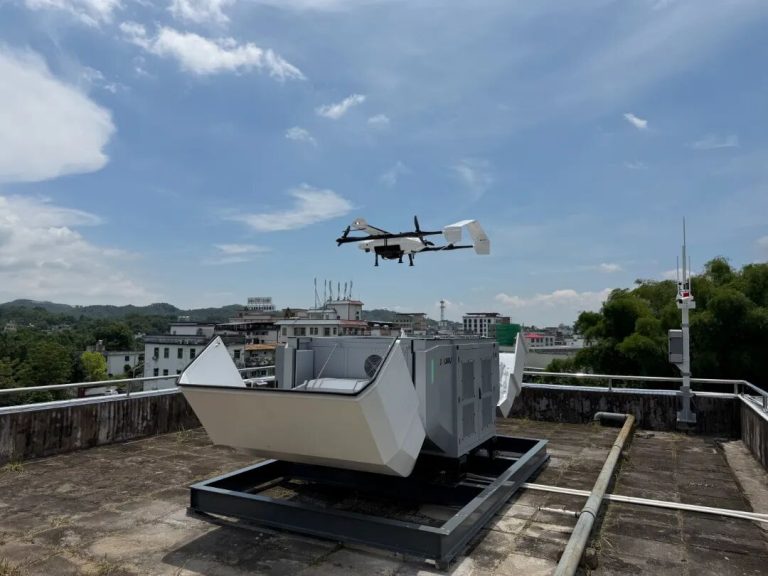
Jieyang Power Supply Bureau of Guangdong Power Grid deployed JOUAV's VTOL Hangar System for remote power line inspections, integrating the JOS-C700 docking station, CW-15V VTOL fixed-wing UAV and JoCloud AI Command Center. During its first two months of operation, the system completed 966.74 km of LiDAR-based transmission line corridor inspections, with a longest single-sortie flight distance of 104.46 km.
At 2:27 PM on a storm-lashed afternoon in July 2025, a small fishing boat capsized off the coast of Gulei, Zhangzhou.
Two men were thrown into violent waters. Winds howled at gale force. Waves surged

JOUAV Product News and Use Cases
Fixed-Wing VTOL Drones Insights and Industry Trends
Invitations to online demo events
 English
 中文
中文