JOUAV drone-in-a-box systems are helping Yuecheng District, Shaoxing, improve road inspection and urban management through aerial mapping and AI-assisted analysis. Combining JOS-C700 VTOL and JOS-P200 multirotor hangar systems, the project covers 311.7 km² of digital mapping, 121.33 km of road imagery collection, and more than 26 km of mountain roads. Applications include tunnel safety monitoring, mountain-road patrols, and AI-powered urban inspection.
At 2:27 PM on a storm-lashed afternoon in July 2025, a small fishing boat capsized off the coast of Gulei, Zhangzhou.
Two men were thrown into violent waters. Winds howled at gale force. Waves surged beyond two meters. From shore, there was nothing—no visual contact, no clear coordinates, no time to waste.
In this stretch of sea, traditional rescue vessels take up to forty minutes just to reach a suspected location. But in cold, turbulent water, survival time can be far shorter.
The “Golden Hour” wasn’t just slipping away—it was being spent searching blindly.
Why Conventional Maritime Rescue Falls Short
Before 2025, maritime rescue in Gulei followed a familiar pattern—one that often cost critical time:
- Patrol boats were too slow to respond to sudden incidents offshore
- Helicopters were frequently grounded due to poor weather
- Command centers relied on estimation, not real-time visibility
Rescue teams were forced to calculate drift patterns across vast, featureless waters—without knowing exactly where victims were.
The response wasn’t just delayed. It was uncertain.
That’s the gap Zhangzhou Maritime Safety Administration set out to close when it established Fujian’s first maritime UAV flight brigade—built from the ground up with support from JOUAV.
But what truly changed the outcome wasn’t just a drone.
It was a system.
A System That Responds Before Humans Can
At the Gulei Coast Guard base, a JOUAV VTOL Hangar operates as a 24/7 autonomous aerial response unit.
Unlike traditional UAV operations that depend on pilots, preparation time, and favorable weather windows, the system integrates:
- An automated hangar
- A VTOL fixed-wing UAV
- A remote command and control platform
Together, they enable unattended, rapid-response deployment—even in harsh coastal environments.
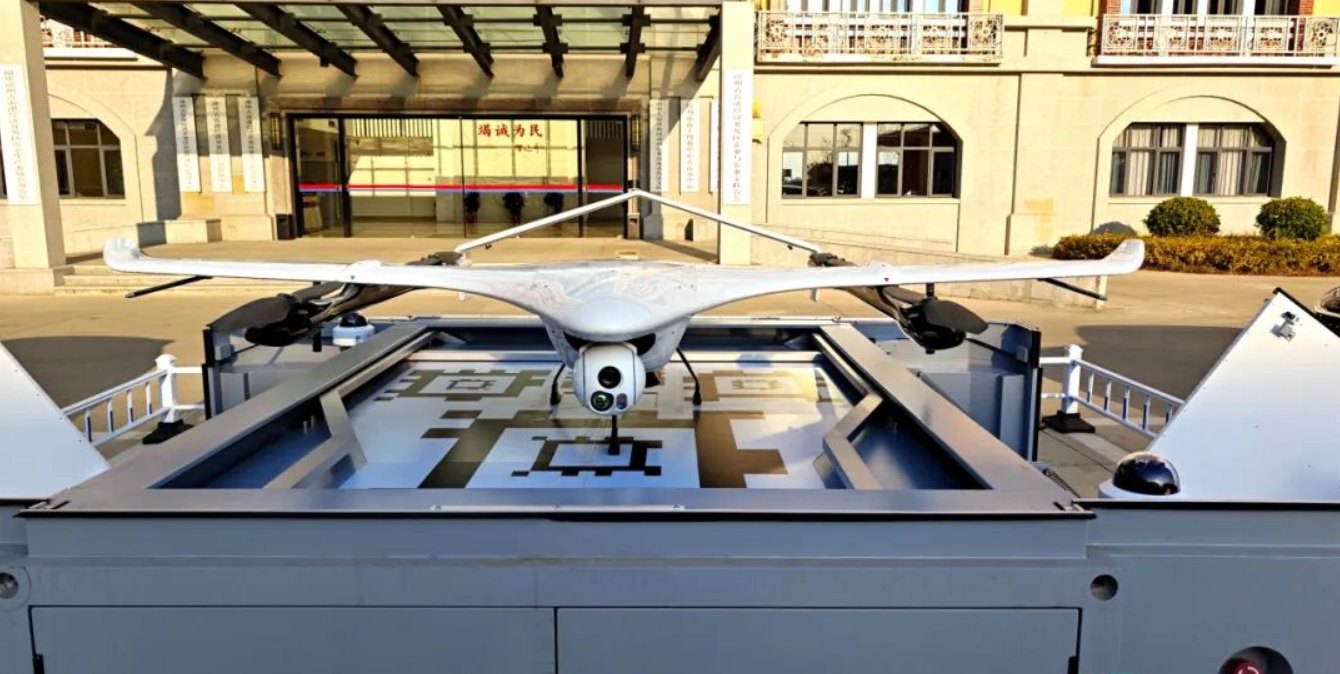
When the distress alert came in that afternoon, there was no scramble, no manual setup.
The system responded.
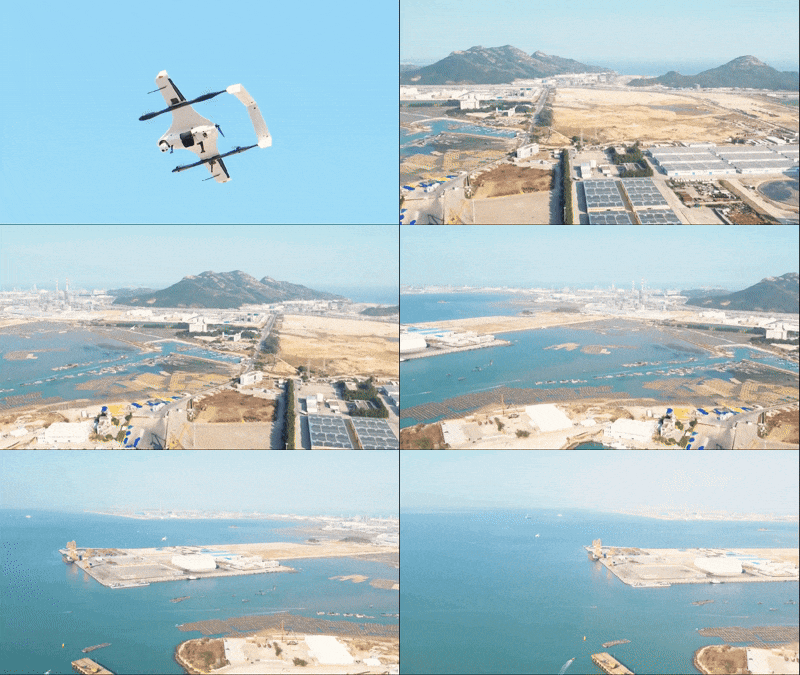
Within minutes, the hangar doors opened automatically. The VTOL drone launched directly into gale-force winds without requiring an on-site pilot.
It covered the seven-kilometer distance to the incident site in just six minutes, cutting through unstable air currents and heavy sea spray.
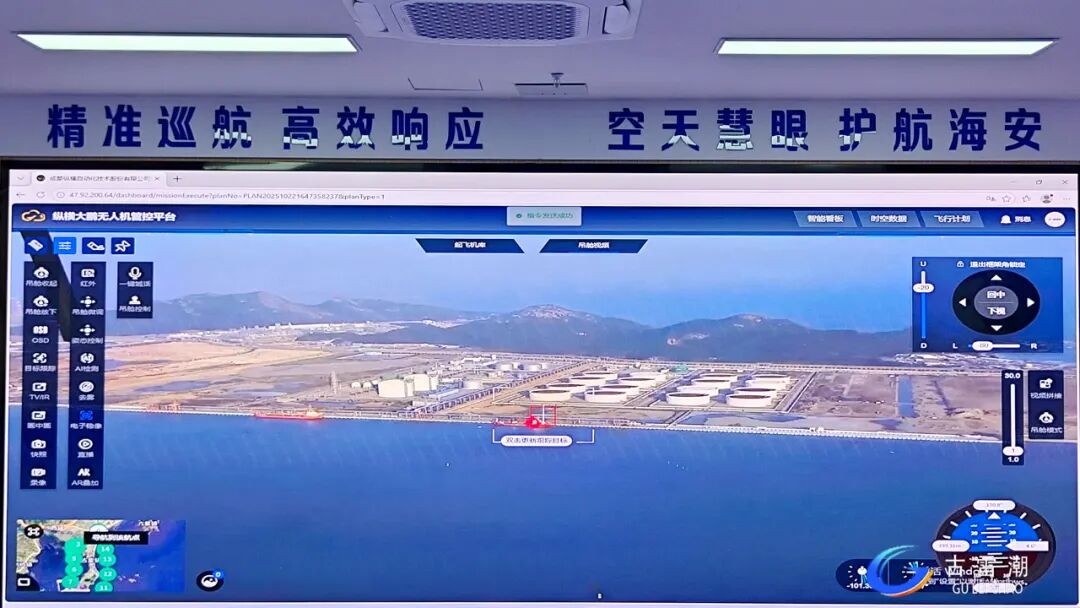
Within ninety seconds of arrival, the onboard dual-sensor payload—combining 30× optical zoom and thermal imaging—identified the two men clinging to floating debris.
The AI tracking system locked onto the targets instantly, maintaining continuous positioning data.
Back at the command center, operators received real-time video and precise coordinates, guiding rescue vessels still miles away.
Captain Lin Wei, Deputy Commander of the brigade, explained the shift:
“This wasn’t just faster deployment. The hangar gave us continuous readiness. We didn’t need time to mobilize—the system was already responding.”
One Hour, Two Lives
From the moment the boat capsized to the moment both men were pulled to safety, just 57 minutes passed.
In maritime rescue, that margin can mean everything.
Instead of spending most of that time searching, rescue teams were directed straight to the victims—guided by real-time aerial intelligence.
The “Golden Hour” was no longer theoretical.
It was operational.
From Emergency Tool to Everyday Infrastructure
That single mission marked a turning point, but it was only the beginning.
Between July 2025 and March 2026, the JOUAV VTOL Hangar has fundamentally reshaped maritime operations in the Gulei region:
- 76 patrol missions completed
- 2,990+ km² of water area covered
- 16 violations detected and addressed
- Response time reduced from 45 minutes to under 15 minutes
But the system’s role extends far beyond emergency response.
It is now embedded into daily maritime safety operations.
Over the Gulei Petrochemical Park, the system supports routine drills and high-risk scenario simulations, including the following:
- Fire response coordination
- Hazardous chemical leak monitoring
- Multi-agency emergency exercises
These are scenarios that were once too dangerous or too complex to simulate in real conditions.
Now, they are conducted regularly—with real-time aerial data feeding directly into decision-making systems.
Chen Weidong, Director of Equipment and Technology at Zhangzhou MSA, summarized the transformation:
“We didn’t just introduce new equipment. We built a complete response system.”
That system includes salt-resistant UAV platforms, automated hangar infrastructure, trained operators, AI-based detection, and an integrated multi-agency coordination mechanism.
The Moment They Knew They Would Survive
For Lieutenant Fang Jie, the pilot overseeing that first mission from the command center, one detail stood out.
The survivors later said they had nearly lost hope—until they heard something above the wind and waves.
The sound of the drone.
“They told us that when they heard it, they knew someone had found them,” Fang recalled. “They knew they weren’t alone anymore.”
A New Standard for Coastal Rescue
The ocean has always been unpredictable—vast, opaque, and unforgiving.
But with persistent aerial coverage and automated response systems, it no longer has to be blind.
The JOUAV VTOL Hangar represents more than faster deployment.
It introduces a new operational model:
- From reactive → to proactive
- From delayed response → to instant awareness
- From human-dependent → to system-driven
In high-risk environments where every minute counts, that shift doesn’t just improve efficiency.
It saves lives.
More Use Cases
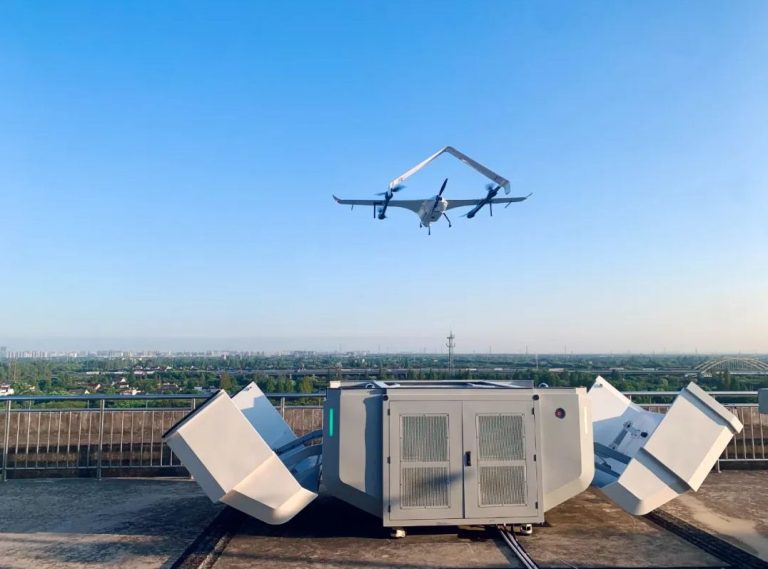
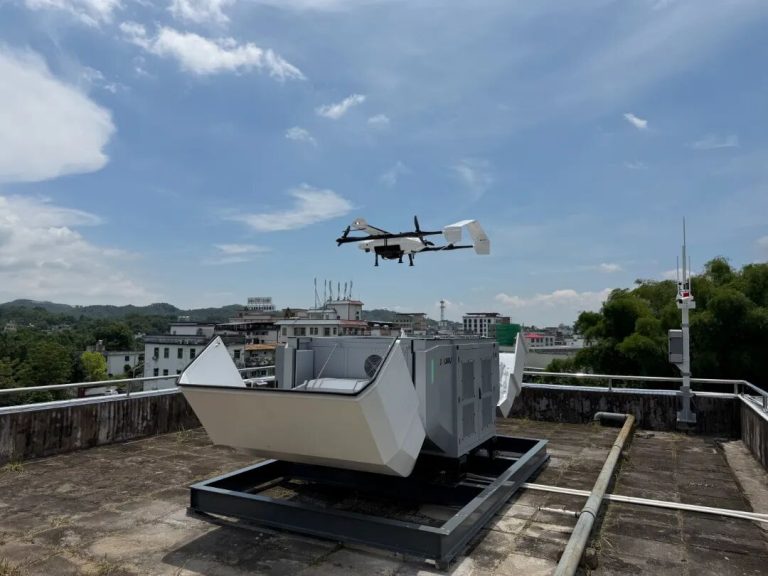
Jieyang Power Supply Bureau of Guangdong Power Grid deployed JOUAV's VTOL Hangar System for remote power line inspections, integrating the JOS-C700 docking station, CW-15V VTOL fixed-wing UAV and JoCloud AI Command Center. During its first two months of operation, the system completed 966.74 km of LiDAR-based transmission line corridor inspections, with a longest single-sortie flight distance of 104.46 km.
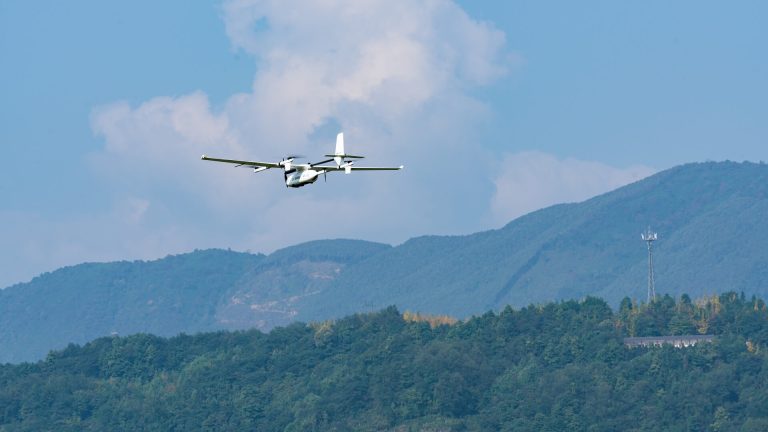
Chongqing’s Qinba Mountains are basically a giant green wall protecting the region. But there’s a problem – pine wood nematodes are eating through it. Fast.
The forestry department n

JOUAV Product News and Use Cases
Fixed-Wing VTOL Drones Insights and Industry Trends
Invitations to online demo events
 English
 中文
中文