JOUAV drone-in-a-box systems are helping Yuecheng District, Shaoxing, improve road inspection and urban management through aerial mapping and AI-assisted analysis. Combining JOS-C700 VTOL and JOS-P200 multirotor hangar systems, the project covers 311.7 km² of digital mapping, 121.33 km of road imagery collection, and more than 26 km of mountain roads. Applications include tunnel safety monitoring, mountain-road patrols, and AI-powered urban inspection.
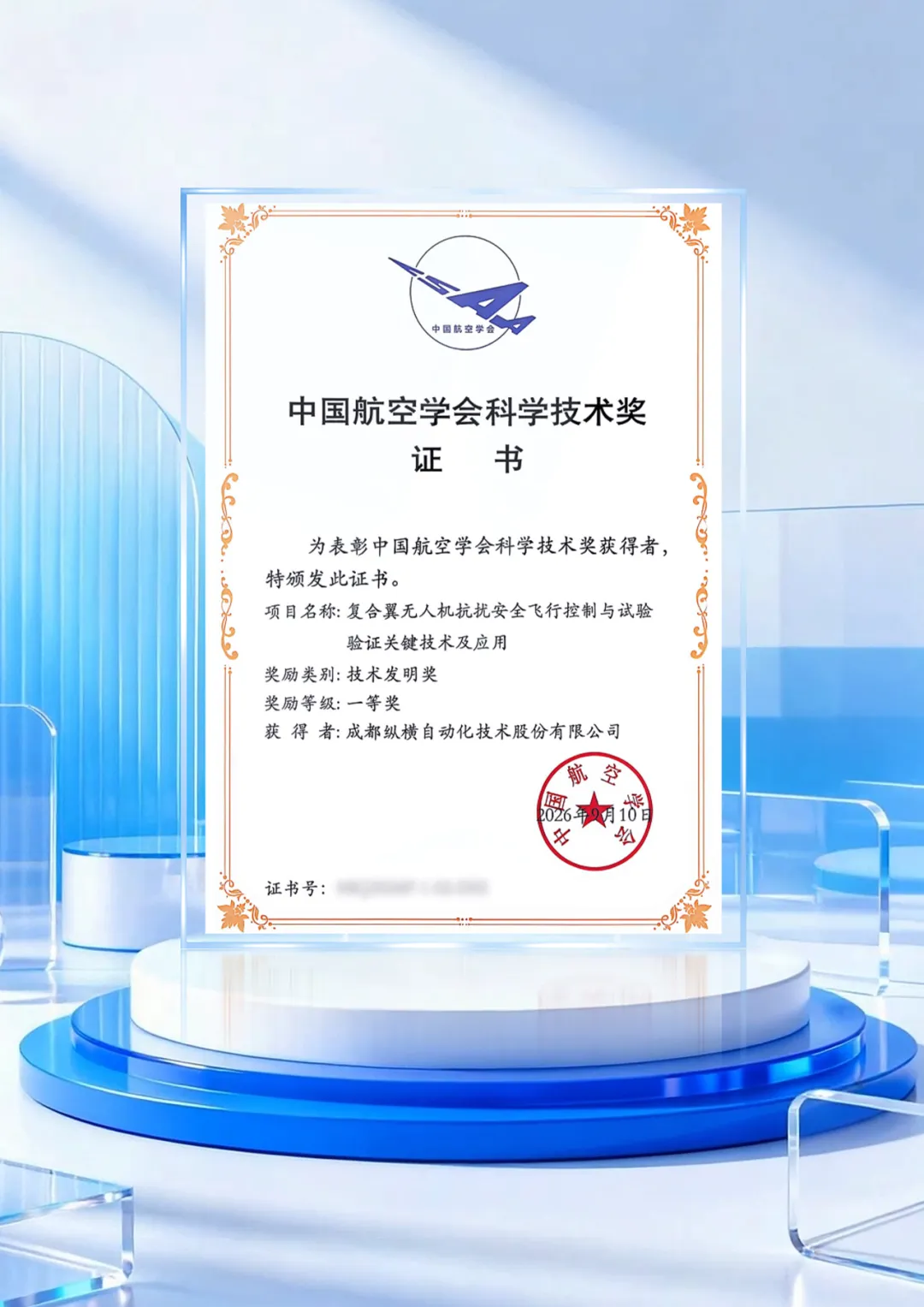
A research project involving JOUAV as the second contributing organization has won first prize in the Technical Invention category of the 2026 China Aeronautical Science and Technology Awards. Nominated by Northwestern Polytechnical University, the project, titled Key Technologies and Applications for Disturbance-Resistant Flight Control and Safety Verification of Hybrid VTOL UAVs, addresses key challenges in flight control and operational safety in complex environments.
The award recognizes the project team's work in improving flight stability, disturbance resistance, fault tolerance, and autonomous landing, supporting the wider application of hybrid VTOL UAVs in demanding operational environments.
Advancing Flight Safety in Complex Environments
Since 2017, the project team has worked to address key technical challenges in the safe operation of hybrid VTOL UAVs, with support from national research programs. The research has led to advances in flight control, disturbance rejection and fault tolerance, multi-source sensing, and autonomous landing, supported by engineering development and testing.
These capabilities are important for UAV operations in environments affected by complex wind conditions, obstacles, and unreliable navigation signals. They can support applications such as infrastructure inspection, emergency response, and other missions where stable flight and reliable landing are essential.
The project's technologies have also been applied in field missions, including scientific expeditions to the Qinghai-Tibet Plateau and Antarctica, as well as emergency response efforts following severe flooding in Henan and the Luding earthquake.
JOUAV's Role in Technology Development and Validation
JOUAV contributed to two key areas of the project. The company was responsible for developing autonomous landing decision-making technology for complex low-altitude environments, helping UAVs identify and execute safe landing procedures under challenging conditions. It also participated in the testing, validation, and application of the hybrid VTOL UAV flight control system designed to improve resistance to external disturbances.
In addition, JOUAV provided hardware and equipment support for modeling, analysis, experimentation, and testing. These contributions helped support the engineering validation and practical application of the project's research outcomes.
Research Achievements and Next Steps
The project has resulted in 45 granted invention patents, 22 software copyrights, three national standards, and more than 100 academic journal papers. According to third-party testing and expert evaluation, the project's overall technical performance reached an internationally advanced level, with its variable-configuration smooth flight control technology and layered active disturbance rejection technology assessed as internationally leading.
Building on these results, JOUAV will continue collaborating with Northwestern Polytechnical University and other research institutions to improve the integration of flight control, environmental perception, and onboard systems. Future work will focus on enhancing UAV safety and stability in challenging conditions, including environments with weak visual features, strong interference, or unavailable satellite navigation.
Through continued research and engineering development, JOUAV aims to help make hybrid VTOL UAV operations safer and more reliable across a broader range of industrial applications.
More Use Cases
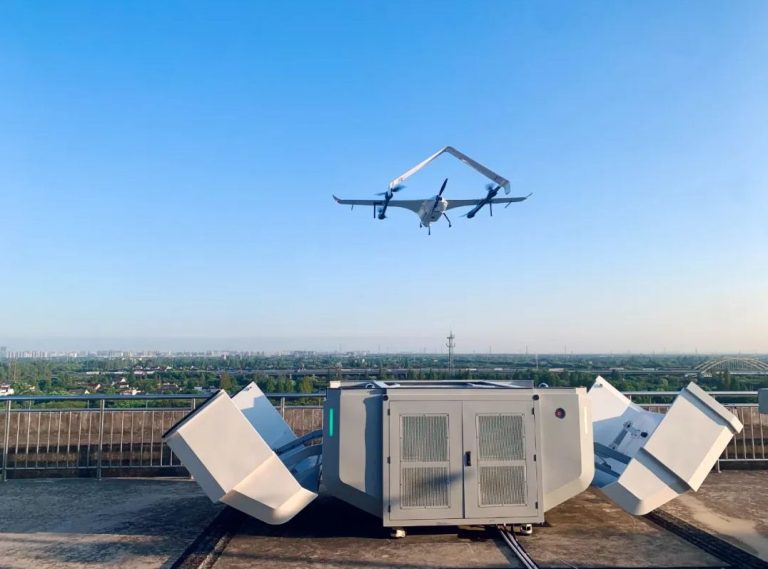
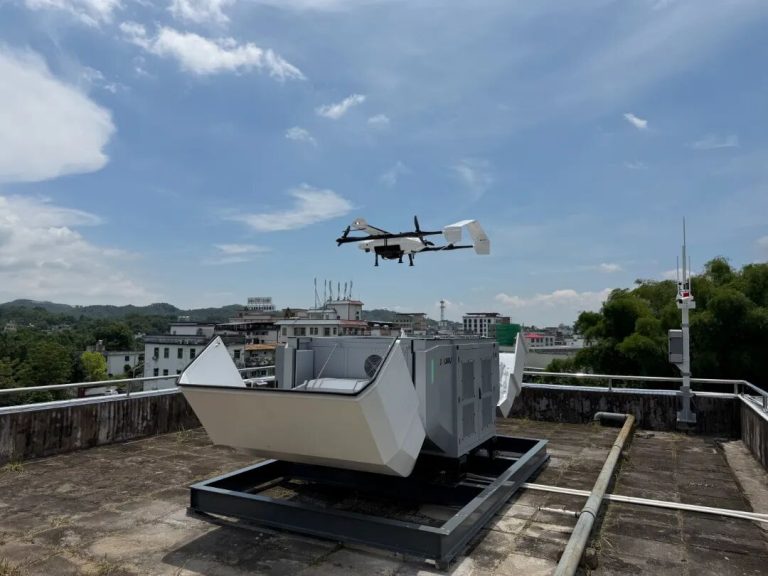
Jieyang Power Supply Bureau of Guangdong Power Grid deployed JOUAV's VTOL Hangar System for remote power line inspections, integrating the JOS-C700 docking station, CW-15V VTOL fixed-wing UAV and JoCloud AI Command Center. During its first two months of operation, the system completed 966.74 km of LiDAR-based transmission line corridor inspections, with a longest single-sortie flight distance of 104.46 km.
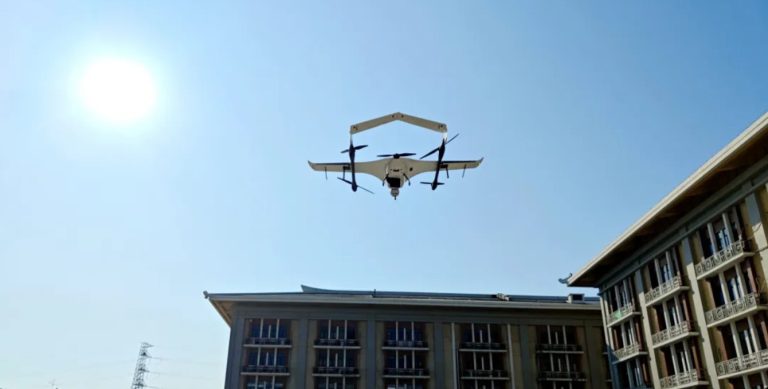
At 2:27 PM on a storm-lashed afternoon in July 2025, a small fishing boat capsized off the coast of Gulei, Zhangzhou.
Two men were thrown into violent waters. Winds howled at gale force. Waves surged

JOUAV Product News and Use Cases
Fixed-Wing VTOL Drones Insights and Industry Trends
Invitations to online demo events
 English
 中文
中文